
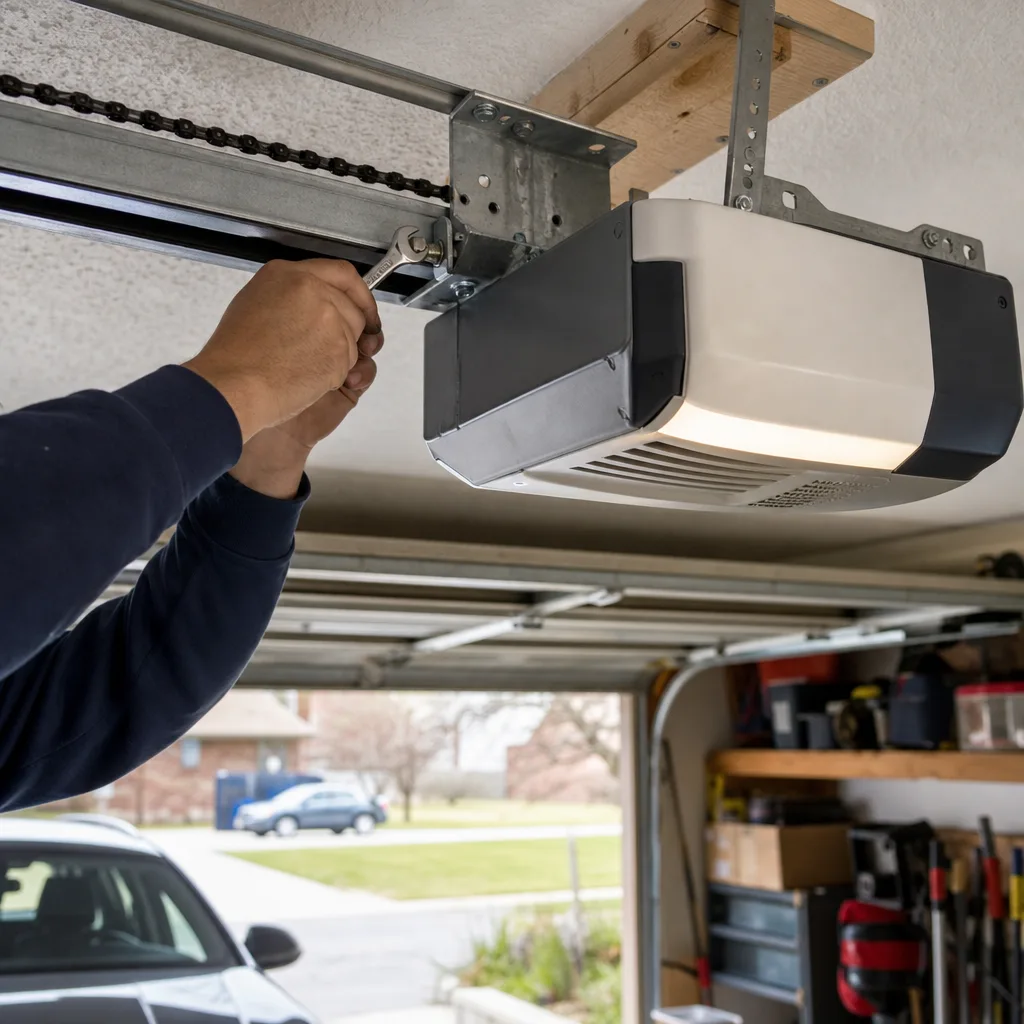
Last updated November 16, 2026
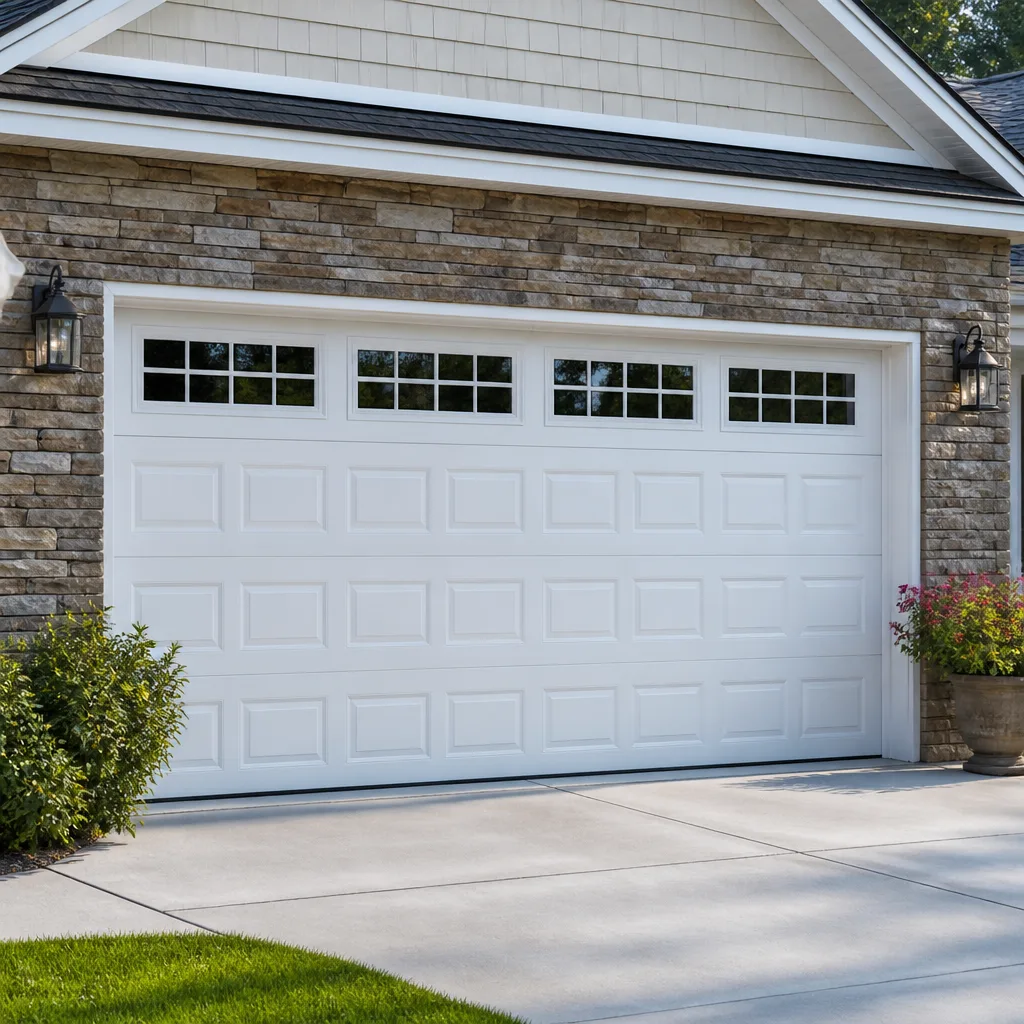 Raised-panel steel
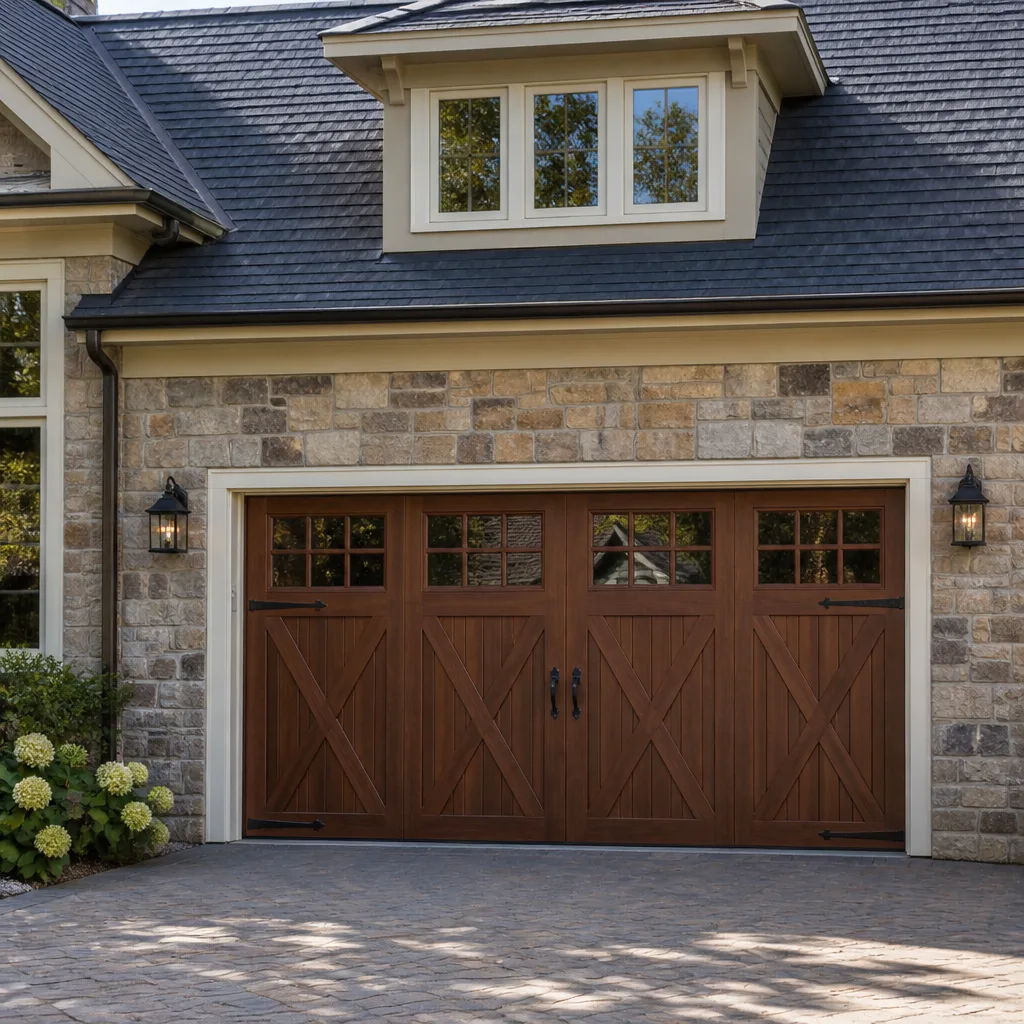 Carriage house
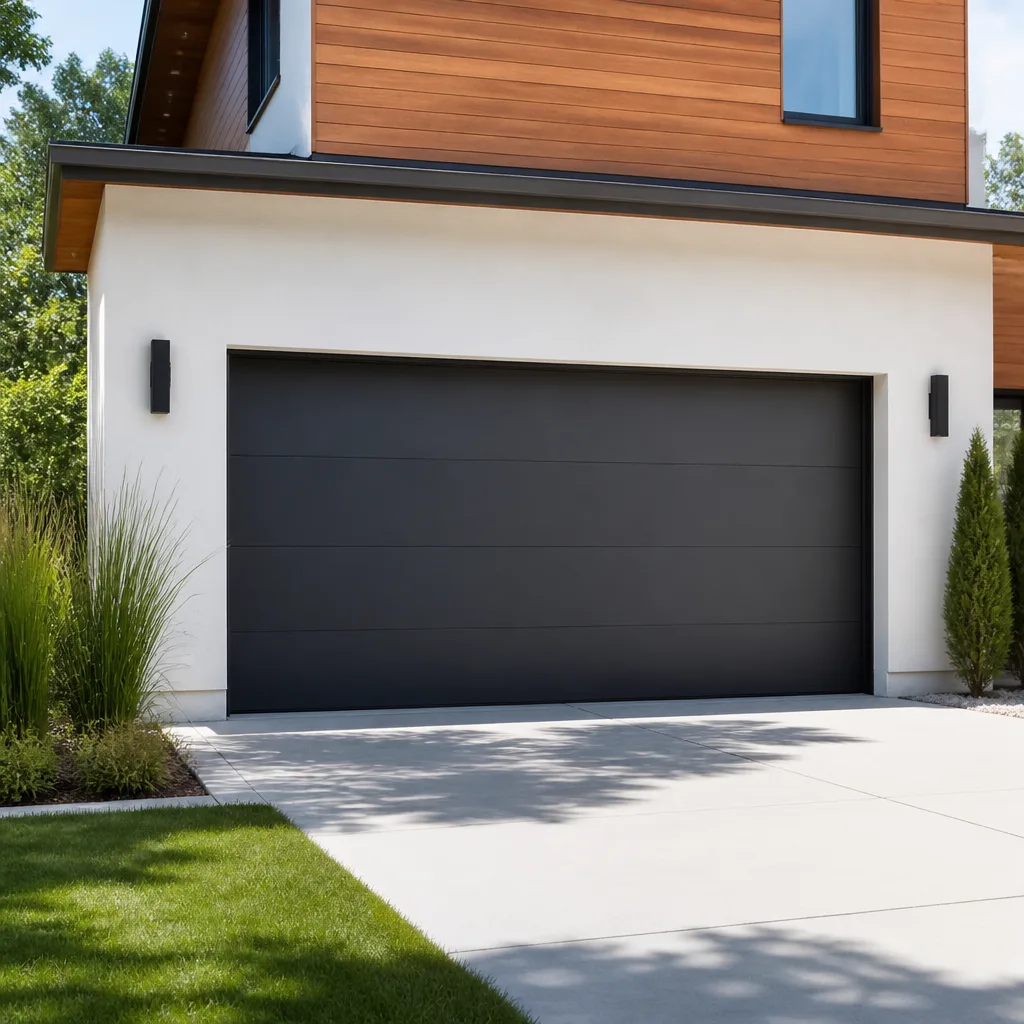 Modern flush
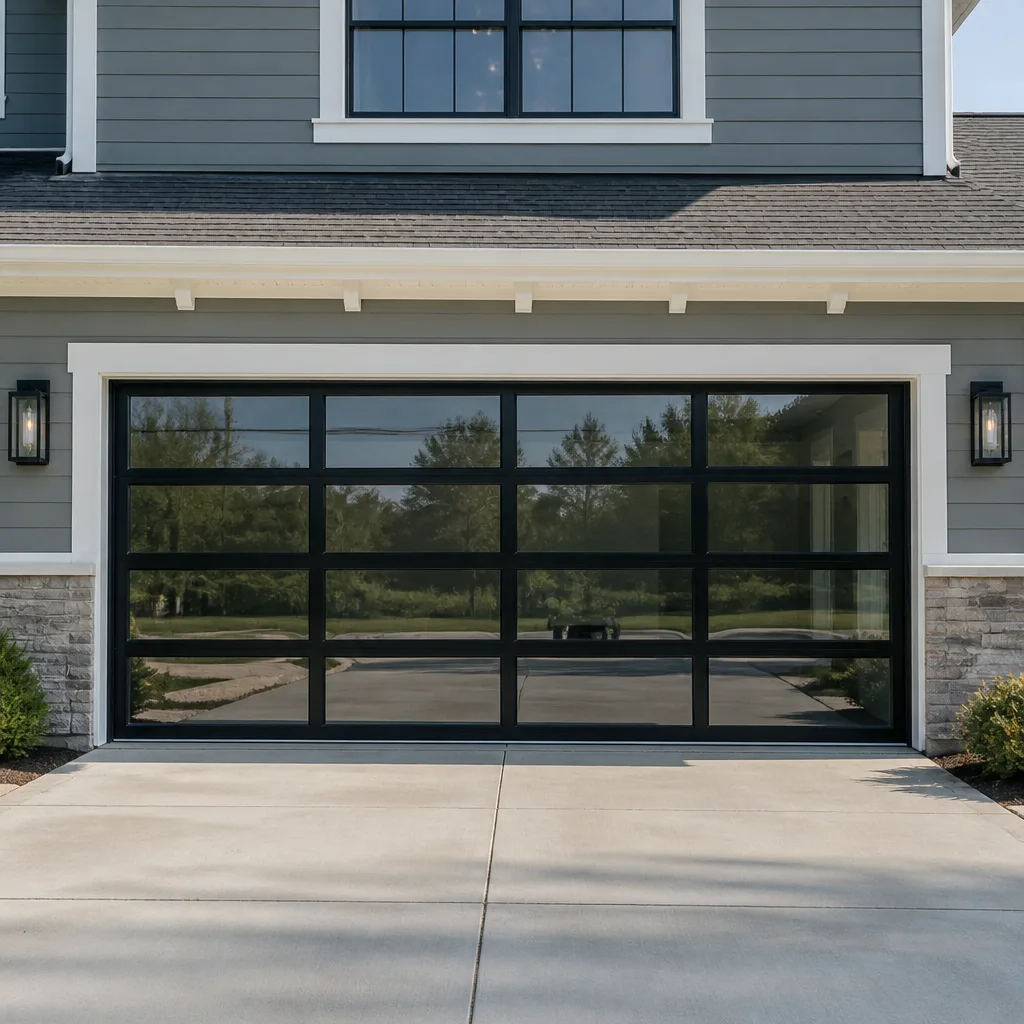 Full-view glass
 LiftMaster openers
 Chamberlain openers
Full 25-point door and opener safety check with every visit - springs, cables, rollers, tracks, and your LiftMaster or Chamberlain opener included
You get a price before we start. It does not change when the pro arrives.
Get your free estimateGarage Door Warning Signs: A Warren Homeowner’s Reference Guide
Most articles about failing garage doors start at the end: the door won’t open, or it slammed down, or a cable snapped. By that point, the cheap window to fix it closed weeks ago. A garage door that’s slightly slower to open than it was six months ago isn’t a quirk or a personality change in your house. It’s the first measurable sign of spring wear. And in Warren‘s cold snaps, “slightly slow” can become “won’t budge” faster than most homeowners expect. This guide works backwards from catastrophic failure to the earliest detectable symptoms, organized by repair urgency rather than by symptom description. You’ll learn which sounds point to which component, how to tell an opener problem from a door problem without touching a tool, and which warning signs are genuinely safe to look at yourself. Warren Garage Door Service works on the door you already have, and we’ve built this reference so you can describe what’s happening accurately before anyone picks up the phone.
Quick Answer
The earliest garage door warning signs are a door that’s slightly slower than it used to be, a faint grinding or popping sound near the top of the door, and a door that doesn’t sit evenly at the bottom. By the time a door reverses on its own, won’t close, or hangs crooked, the problem has usually progressed from a cheap adjustment to a loaded-spring or cable issue that needs a technician. In Warren, symptoms often go quiet during a cold snap and return worse in spring, which is the single most common reason homeowners delay a repair that was already due.
Styles & brands we work with
- Raised-panel steel
- Carriage house
- Modern flush
- Full-view glass
- LiftMaster openers
- Chamberlain openers
Table of Contents
- Early-Stage vs. Late-Stage Warning Signs
- Opener Problem or Door Problem? How to Tell Without Tools
- What Each Sound Tells You About the Failing Part
- What You Can Safely Check Yourself (and What You Can’t)
- The “It Fixed Itself” Trap in Warren’s Cold Snaps
- Safety Features That Quietly Stop Working
- Organizing Warning Signs by Repair Urgency
- What Garage Door Repairs Typically Cost in Warren
Early-Stage vs. Late-Stage Warning Signs
A garage door fails in a sequence, not all at once. The useful way to read the warning signs is by stage, because the stage tells you how much time you have and roughly what the repair involves. Early-stage signs are almost always about wear and balance. Late-stage signs are about load, and load is where things get expensive and dangerous.
Early-stage warning signs tend to show up gradually and quietly:
- The door opens or closes a beat slower than it did a few months ago
- A faint rattle or squeak at the start of travel that fades once the door is moving
- The door doesn’t sit perfectly flush along the bottom on both sides
- You can hear the opener motor working harder than it used to
- The door pauses or hesitates for a half-second before reversing direction
Late-stage warning signs are the ones people tend to notice, and by then the mechanism is telling you something is already loaded or broken:
- The door reverses before touching the ground, or won’t close past a certain point
- A loud pop or bang from above the door
- The door hangs visibly crooked, with one side higher than the other
- The opener runs but the door doesn’t move
- A gap opens between the door sections, or a panel looks bent
In our experience around Warren, the gap between early and late stage is often shorter than the homeowner expects, especially in a cold winter. A door that was “a little slow” in November is frequently a door that needs a spring evaluation by February. The rest of this guide walks through each stage in detail, starting with how to tell garage door repair needs apart from garage door opener repair needs, because those two fixes are completely different jobs.
Opener Problem or Door Problem? How to Tell Without Tools
Here’s the single most useful diagnostic split in garage door service, and you can do it with no tools at all: pull the opener’s release cord, then operate the door by hand. The door should lift smoothly and stay up on its own when you let go partway. If it doesn’t, the problem is in the door’s mechanical parts – springs, cables, rollers or tracks. If it lifts smoothly by hand but the opener grinds, hums or won’t engage, the problem is in the opener itself.
This split matters because the fixes are unrelated and the cost of misdiagnosis is real. A worn spring can make an opener strain and eventually burn out its gear; a failing opener on a healthy door isn’t a door problem at all. Homeowners who assume “the door is broken” often ask for a full replacement when the actual issue is an opener motor that needs service. That’s the model we work from at Warren Garage Door Service: repair first, replace only when necessary.
A simple walk-through of the test:
- Close the door and pull the release cord hanging from the opener carriage.
- Lift the door slowly by hand until it’s about halfway up. It should feel balanced, not heavy or jerky.
- Let go gently. A healthy door stays where you left it; a worn one sinks or drops.
- Reconnect the carriage and run the opener. Listen for the motor sound and whether the door actually moves.
If the door is heavy or sinks on that test, stop and call a technician. That’s a loaded-spring situation, and we explain why in the safety section below. If the door moves fine by hand but the opener doesn’t, a Genie or Chamberlain opener is almost always repairable, and it doesn’t require a new door. The opener’s brand doesn’t matter to us. Your opener brand is covered, and we diagnose the actual problem rather than quoting a replacement.
What Each Sound Tells You About the Failing Part
The sounds your door makes are a language. Homeowners often describe them in ways that don’t match the actual failing part, which is why we listen carefully and ask specific questions. Here’s how we map the common sounds to components, so you can describe the problem accurately when you call. Warren Garage Door Service technicians have up to 12 years of experience, and most of them can start narrowing the cause from the sound alone.
- Grinding or a metal-on-metal scrape: usually rollers, hinges or a track that’s out of alignment. Rollers are a wear item and often the culprit.
- A loud pop or bang from above the door: a spring under load releasing or breaking. This is the most urgent sound on the list.
- Creaking or a rhythmic squeal: dry or worn moving parts – hinges and rollers that need attention, sometimes a torsion tube issue.
- Rattling that increases with speed: loose hardware or a panel that’s working free of its hinges.
- Humming with no door movement: opener motor running but the carriage disconnected or a gear worn out.
- Scraping along the floor: the door isn’t sitting square, or a bottom seal or roller has failed.
In Warren’s climate, cold-weather contraction makes several of these sounds louder than they are in warmer months, so a door that pops or creaks in January may settle down in March without the underlying cause going away. That’s the trap we cover further down. If you’re trying to pinpoint a sound before you call, jot down when it happens – at the start of travel, in the middle, or at the end – and whether it changes with temperature. That single detail speeds up the diagnosis more than anything else.
What You Can Safely Check Yourself (and What You Can’t)
Some warning signs are genuinely safe for a homeowner to look at. Others involve parts that can injure you badly if you touch them, and those need a trained technician every time. Knowing the difference is the whole point of a warning-signs guide, so we sort it plainly.
Safe to check yourself:
- Visual balance: does the door sit level at the bottom?
- The manual lift test above – pull the release cord and lift by hand
- The reverse test: put a small object in the door’s path and confirm the door reverses
- Visible hardware: loose screws on hinges and any cracked or bent rollers
- Whether the opener motor runs when the door doesn’t move
- Worn weather seal along the bottom of the door
Not safe to check yourself – stop and call a technician:
- Anything involving the torsion spring, extension springs or cables above the door
- Untangling or adjusting a cable that has come off its drum
- Forcing a door that’s jammed partway up
- Reaching into the opener rail to clear a jam while the unit is powered
A torsion spring under load stores an enormous amount of energy, and it doesn’t care who’s standing under it. If you see a gap in the spring coil or a cable that’s come loose, don’t touch it and don’t try to work around it. Disconnect nothing, prop nothing, and get a technician out. This is the one part of the guide where we’re deliberately not giving you more detail than that – knowing the hazard is what keeps people safe. For everything in the first list, though, take notes and describe what you find when you call.
The “It Fixed Itself” Trap in Warren’s Cold Snaps
This is the section we wish every Warren homeowner read before winter. Cold snaps in this part of Michigan can make a developing problem go temporarily quiet, and the door appears to have fixed itself. It hasn’t. The part is still worn; the weather just changed how it shows up.
Here’s the mechanism, in plain terms. Cold contracts metal and stiffens the grease inside hinges and rollers. On a door where a spring is nearing the end of its life or a roller is worn, the cold sometimes changes the way the door travels just enough to mask a symptom – a squeal goes silent, a pause disappears, a crooked section lines up better. When temperatures ease, the symptom returns, and it’s usually worse because the wear kept progressing the whole time. A door that “got better over the winter” is often a door that’s now due for the repair that was already needed in the fall.
The practical takeaway: treat any warning sign that disappears with the weather as a sign that hasn’t gone away – just deferred. Write it down. If you noted a slow opening in November, a squeal in January and a crooked bottom in March, that’s one continuous problem getting more expensive, not three separate coincidences. Warren winters tend to make this pattern very clear, and it’s why we encourage homeowners to keep a short note of symptoms over the season rather than waiting for a hard failure.
Doors and openers installed with Clopay or Amarr components in this area, and openers from Chamberlain and Genie, tend to show the same cold-weather masking pattern – the brand matters less than the fact that the wear is real. If you’re in the Warren area and a symptom keeps coming back every spring, that’s the guide asking you to have it evaluated.
Safety Features That Quietly Stop Working
Among all the warning signs, the ones that fail silently are the most dangerous: the door’s safety reverse. Every modern opener has two safety systems – the auto-reverse that stops the door when it meets resistance, and the photo-eye sensors near the floor that stop the door if the beam is broken. Both can degrade without any obvious noise, and a door that appears fully functional can still fail to reverse on a child or pet.
You can test both of these yourself, and we recommend doing it periodically:
- Open the door fully and then close it, placing a small object like a piece of wood in its path. The door should reverse when it contacts the object.
- Check the photo-eye sensors near the floor on both sides of the door. Confirm the indicator lights are on and steady.
- Wipe the sensor lenses if they’re dusty or misted. If the beams aren’t aligned, the door won’t close reliably.
- If the door doesn’t reverse on contact, stop using it and call a technician.
A door that fails this test is a call-us-today situation, not a “deal with it next month” situation. It’s also one of the signs that separates a safe Homeowner-level issue from one that needs service. If your opener is a Chamberlain or a Genie and the reverse function has quit, it can almost always be repaired rather than replaced, and the repair is usually straightforward once a technician is on site.
Organizing Warning Signs by Repair Urgency
The final sort that matters when you’re deciding whether to call today, this week or next month. We group warning signs into three tiers so you know where each one sits.
Tier 1 – Call today:
- A loud pop or bang from above the door
- A door that won’t close, or reverses repeatedly without reason
- A cable that’s come loose or is visibly frayed
- The door hangs crooked or a panel has separated
- The safety reverse has failed
Tier 2 – Call this week:
- The opener runs but the door doesn’t move
- A door that closes partway and stops
- Consistent grinding or scraping during travel
- The door won’t stay up when lifted by hand (balance problem)
Tier 3 – Schedule a repair:
- The door is slower than it used to be
- Occasional squeaks, rattles or a door that sits slightly off at the bottom
- Opener noise that has gotten louder
- Weather seal wear
Tier 1 signs involve stored energy or a door that may fall, so they aren’t a “wait and see.” Tier 3 signs are the cheap fixes that keep you out of Tier 1, which is exactly the point of this whole article. A Warren Garage Door Service technician can triage by phone, and if a Tier 3 symptom is all you have, there’s no harm in scheduling a visit before it climbs the tiers.
What Garage Door Repairs Typically Cost in Warren
Garage door repair costs vary by the part involved, so here’s a plain reference. These are typical estimated ranges in the Warren market, and the written estimate you get before any work begins is what sets your final price. We quote and agree the price before we start, so there are no surprises on the invoice.
Common repair costs (typical estimate):
- Single torsion spring replacement: $180-$340 for one spring. A matched pair is usually replaced together, so a pair runs about twice that.
- Roller replacement: a per-door job, typically quoted as a set
- Opener repair: depends on whether it’s the drive system or the electronics, and is quoted per job
- Panel or hardware repair: quoted after the extent of the damage is seen
- New install or replacement: measured and scheduled, priced in a written estimate
You don’t get a good number by guessing, so the honest move is to get the estimate in writing before anyone touches the door. Warren Garage Door Service offers free estimates in Warren – call (866) 942-9754. We quote the job per part, walk you through what failed, and won’t suggest a new door when a repair does the job. Prices are estimated per job, and the written estimate sets the final price.
Common Mistakes to Avoid
- Waiting for the door to fail completely. A late-stage door is always more expensive and more hazardous than the early-stage symptom that preceded it. The cheap fix is the one you schedule while the door still works.
- Trying to fix a loaded spring with a YouTube video. Torsion springs and cables store enormous energy, and it’s the leading cause of serious garage door injury. If a spring or cable is the issue, call a technician.
- Assuming it’s the door when it’s the opener. The manual lift test tells you which system is at fault; skipping it means you might quote for the wrong repair.
- Treating a cold-weather disappearance as a cure. In Warren, the symptom that goes quiet in winter comes back in spring, usually worse. Note it and schedule it.
- Letting the safety reverse go untested for years. It fails silently by design. Test it periodically and treat a failure as urgent.
- Oiling the wrong parts. Grease on a torsion spring or the opener rails attracts dirt and doesn’t fix the cause. The correct answer is to have the moving parts checked, not to drip lubricant everywhere.
- Quoting one spring when the pair needs replacing. A single spring priced on its own, then paired on the invoice, is a common source of sticker shock. Ask which springs will be replaced and confirm it in the written estimate.
See the difference
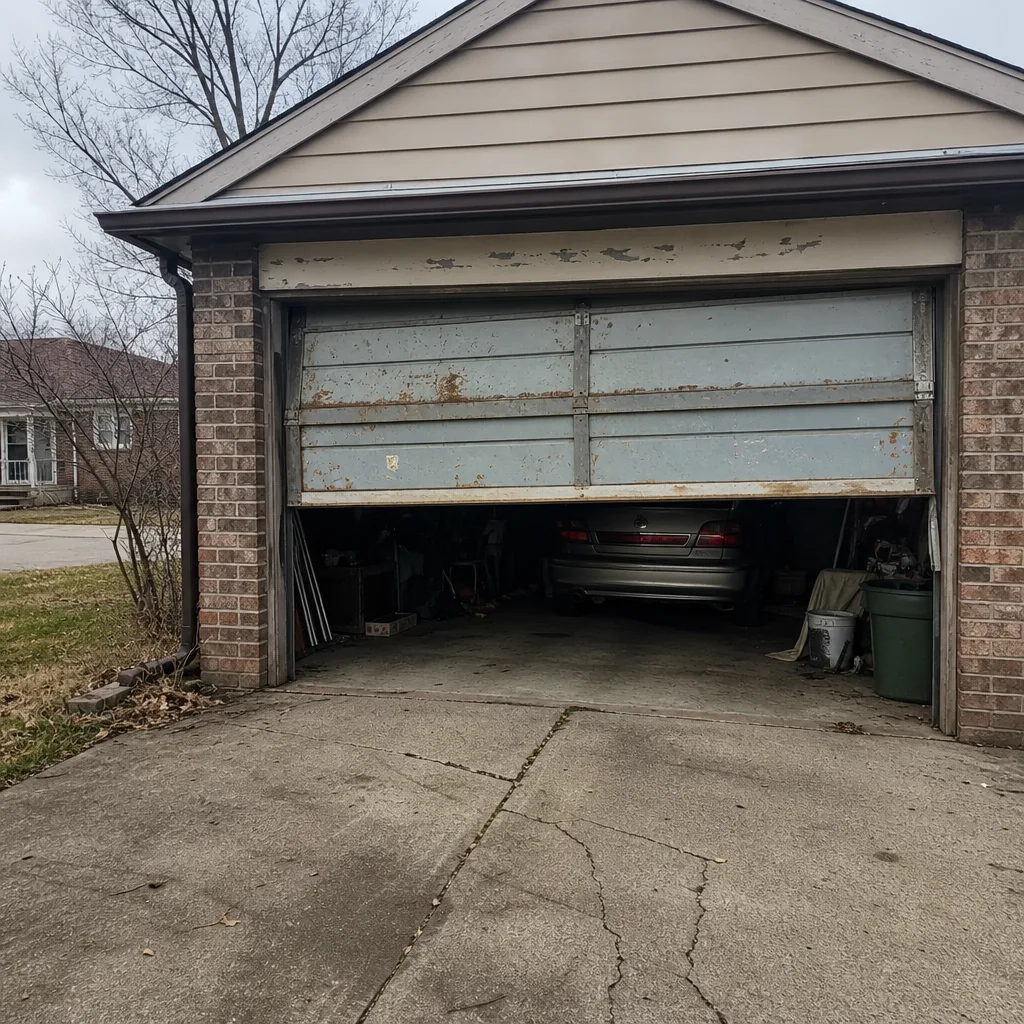 Before
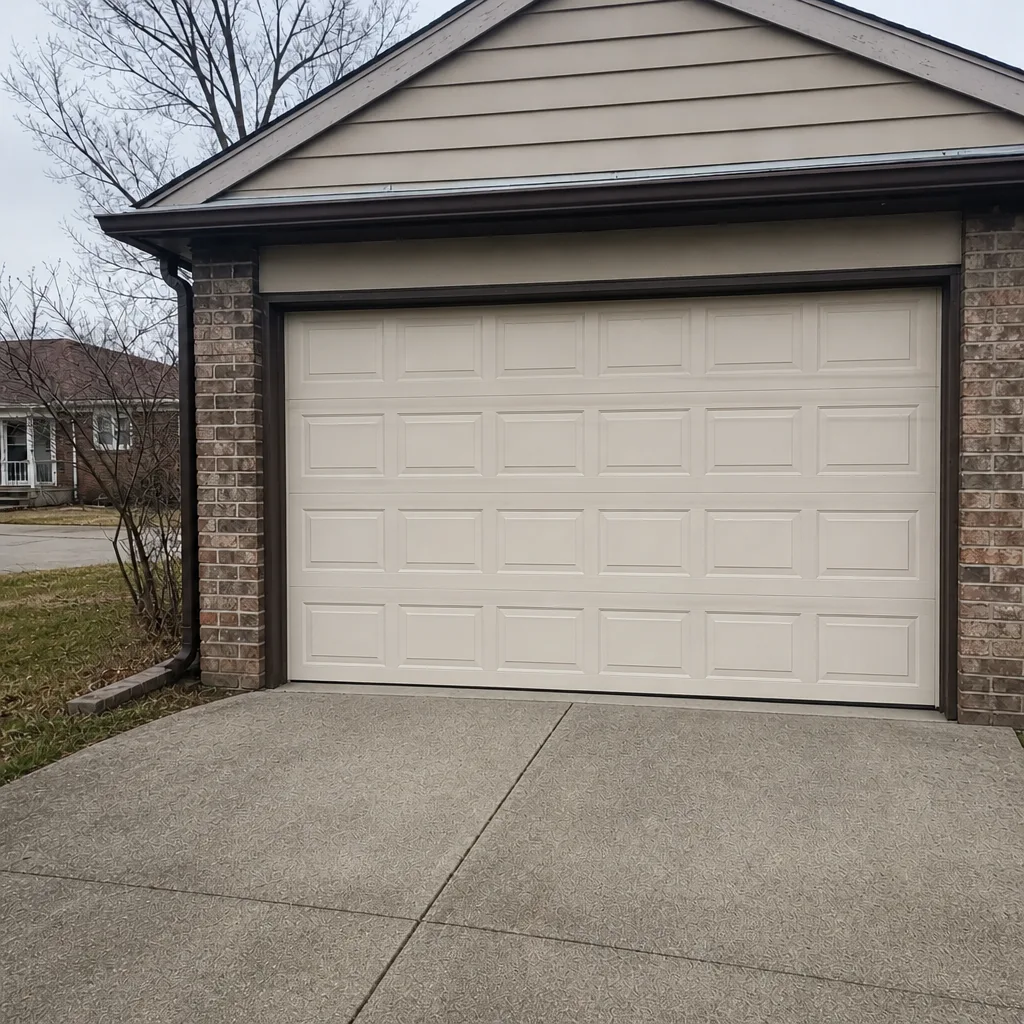 After
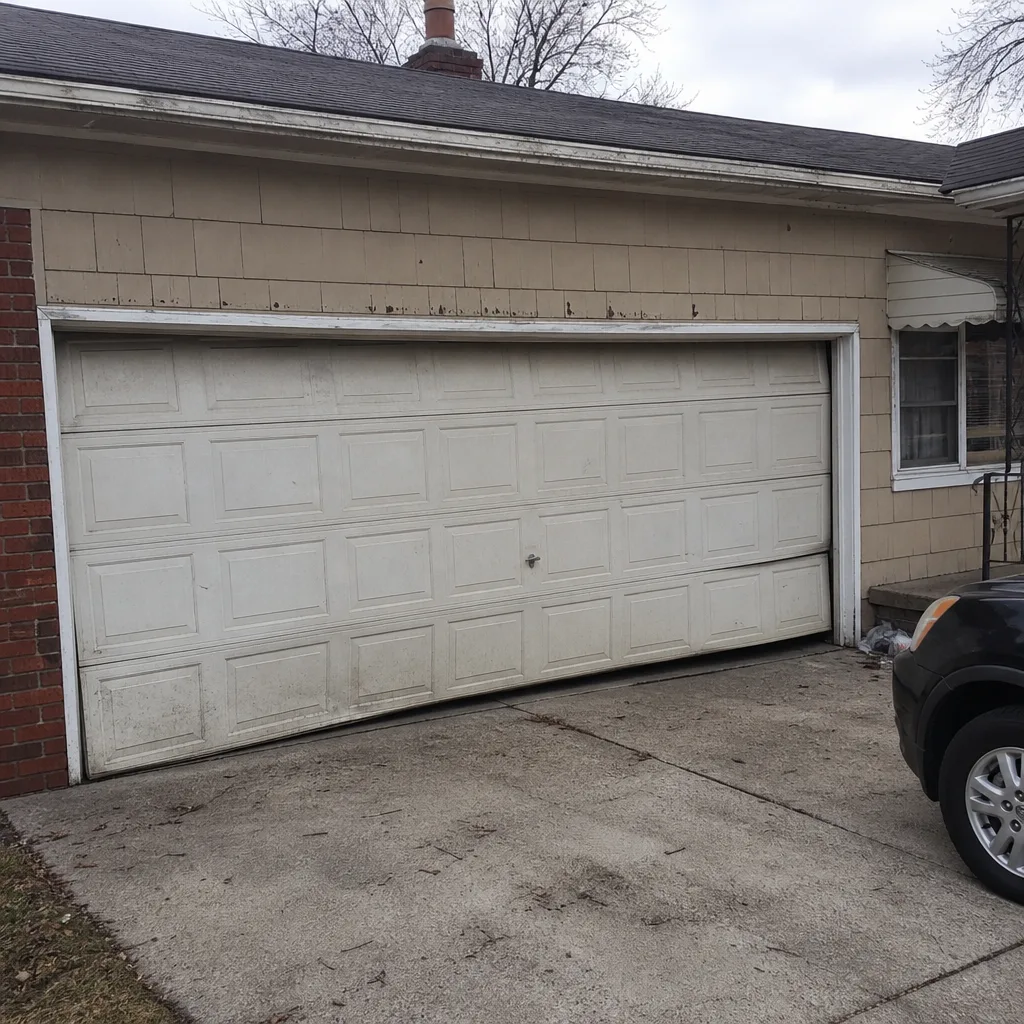 Before
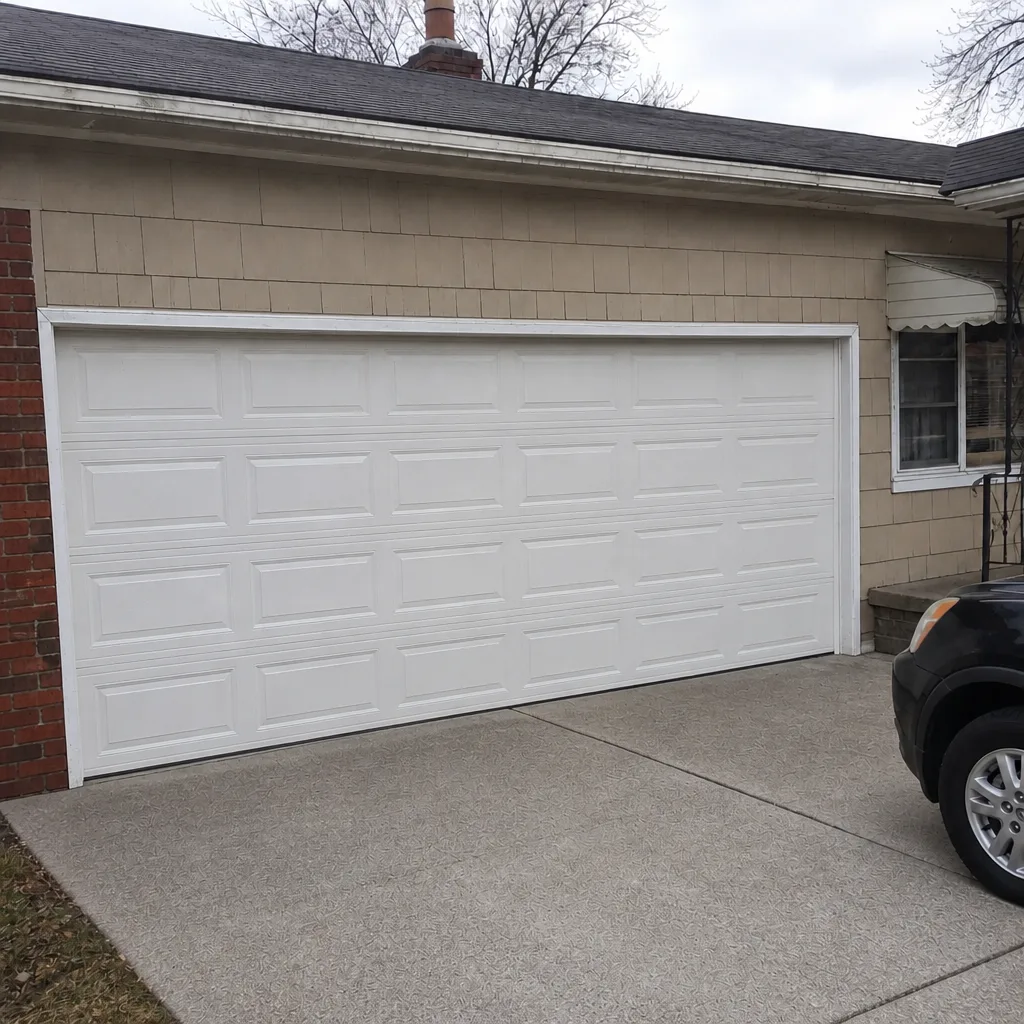 After
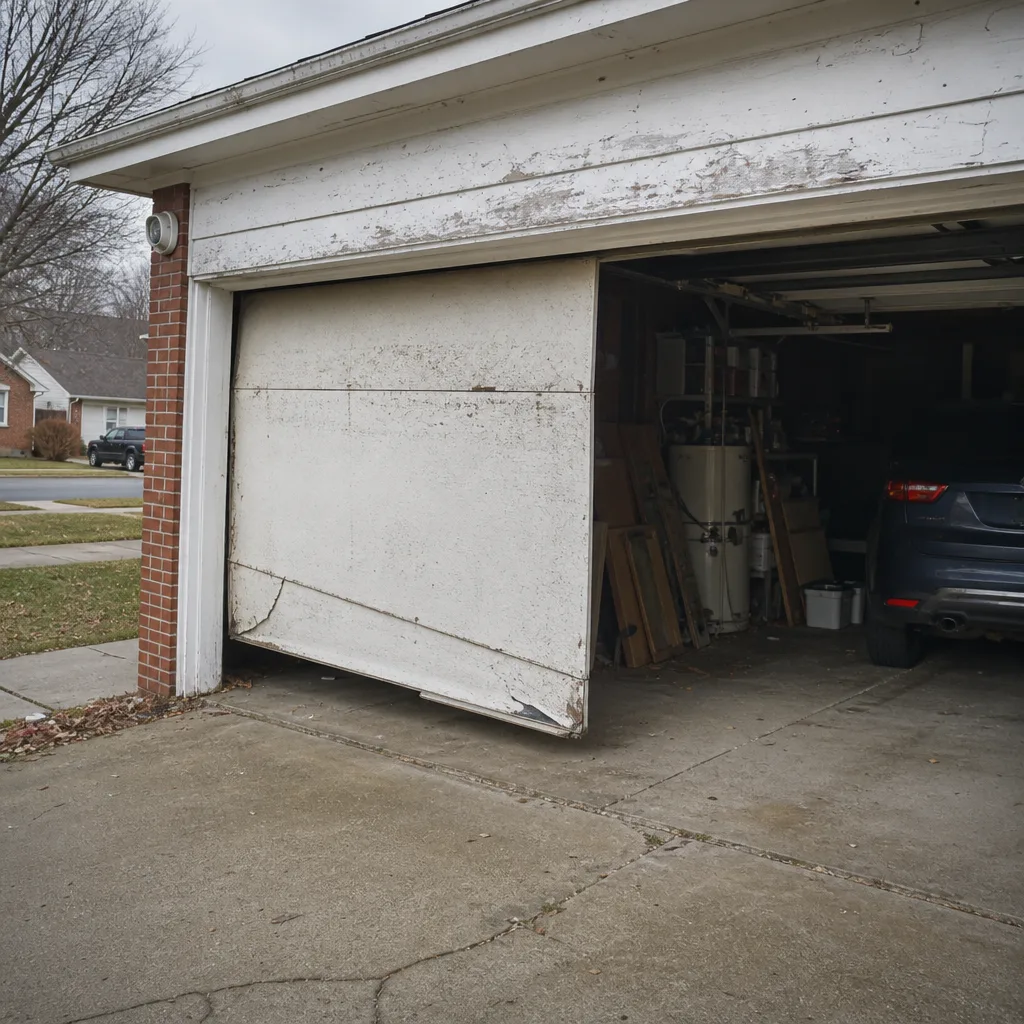 Before
 After
When to Call a Professional
Call a professional when the sign crosses into Terrace 1 or involves a spring, cable or safety function you can’t test safely – a door that won’t close, a break or pop you heard but didn’t see, a cable that’s come loose, or a safety reverse that’s stopped working. Call for the slower signals too: a door that’s heavier than it used to be, an opener that grinds without moving the door, or a symptom that keeps returning every spring. Earlier is cheaper, and the difference between a Tier 3 adjustment and a Tier 1 failure is usually a handful of weeks. Warren Garage Door Service offers free estimates in Warren – call (866) 942-9754. We answer 24/7. Fast dispatch from 7am to 7pm, Sunday through Friday, and we’re closed on Saturday.
Frequently Asked Questions
A door that’s slightly slower to open than it used to be, often paired with a faint squeak or hesitation at the start of its travel. That combination usually points to spring wear or a worn roller, both of which are cheaper to fix early than after a failure.
No – a symptom that disappears with warmer weather is still a real problem, just masked by cold contraction. In Warren, the symptom usually returns in spring and is worse by then, so treat it as deferred rather than gone. Call (866) 942-9754 for an exact quote – estimates are free.
Pull the opener’s release cord and lift the door by hand. If the door lifts smoothly and stays up on its own but the opener won’t engage, it’s an opener problem; if the door is heavy or sinks, it’s a door problem. Either way, a technician can confirm without a guess.
Most warning signs point to a repairable part – a spring, roller, hinge or opener component. A full replacement is the right call only when the door’s structure is compromised or the repair cost would exceed a sensible share of replacement. We diagnose the actual problem before recommending anything.
Yes – our technicians are state-licensed and insured. We work on the door you already have, and we’re brand-neutral: LiftMaster, Chamberlain, Genie, Clopay, Amarr, Wayne Dalton, Craftsman and Raynor are all covered, so your existing system is supported.
Cold contracts metal and stiffens the grease inside hinges and rollers, which makes existing wear more audible. If a rattle or squeal only shows up in cold weather, that’s the wear telling you to schedule a check before it becomes a failure. Call (866) 942-9754 and we’ll book it in – fast dispatch from 7am to 7pm, Sunday through Friday.
The Bottom Line
Garage door failures have a sequence. A slightly slow door, a faint squeak and a bottom edge that’s off are the earliest signals – and the ones worth acting on, because they keep you out of the expensive, dangerous tiers. Sounds tell you which part is failing; the manual lift test tells you whether it’s the door or the opener; and in Warren, a symptom that fades with the cold has not faded at all. Test your safety reverse regularly, don’t touch a loaded spring, and describe what you’re hearing accurately when you call. If you need a second opinion on a symptom, Warren Garage Door Service handles repair, opener repair and installation under one name. You don’t have to guess which part failed or whether a replacement is really needed. We work on the door you have, and your opener brand is covered.
Call (866) 942-9754 for a free estimate. We answer 24/7. Fast dispatch from 7am to 7pm, Sunday through Friday. The price is quoted and agreed before any work starts, so you’ll know what’s happening and what it costs before we begin.
Written by the team at Warren Garage Door Service.