
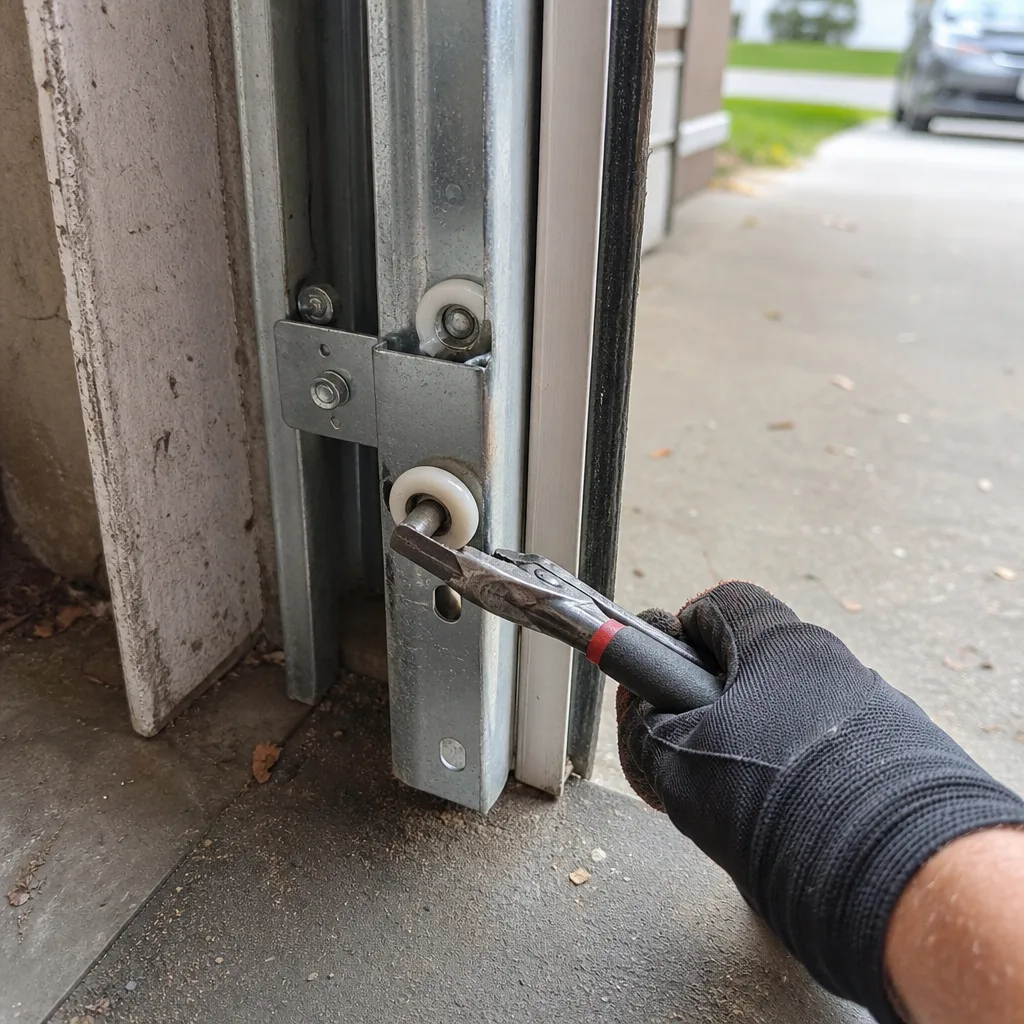
Last updated November 16, 2026
 Raised-panel steel
 Carriage house
 Modern flush
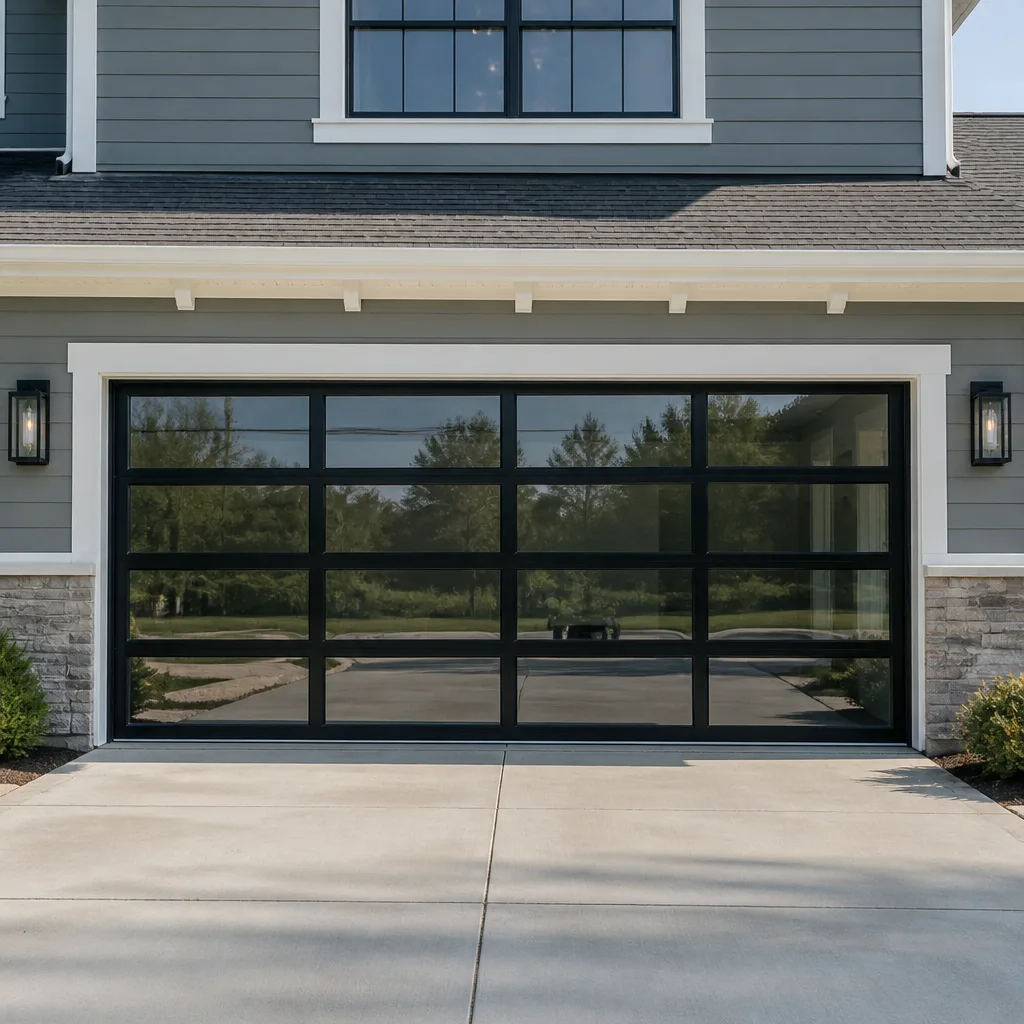 Full-view glass
 LiftMaster openers
 Chamberlain openers
Full 25-point door and opener safety check with every visit - springs, cables, rollers, tracks, and your LiftMaster or Chamberlain opener included
You get a price before we start. It does not change when the pro arrives.
Get your free estimateGarage Door Repair Troubleshooting in Warren: Common Problems and How to Fix Them
A garage door that “won’t open” is almost never one problem. It’s one of at least a dozen distinct failure points, and the label people put on the symptom usually sends them toward the wrong part. A homeowner hears a click and buys a new opener. A door jolts and reverses and they assume the sensors are dirty. Neither guess touches the actual fault, and both waste a week waiting on parts that were never the issue. Here’s what we’ve learned: nearly every garage door failure in Warren falls into one of four mechanical categories, and identifying the category narrows the fix to a handful of causes before anyone picks up a tool. This guide teaches you that triage system, the sounds that map to specific components, and the hard-stop line between what you can safely adjust and what involves stored spring tension and should never be touched.
Quick Answer
Most garage door failures trace back to one of four systems: the opener and its power, the springs and cables, the tracks and rollers, or the safety sensors. Match your symptom to the category first, then check the simplest cause inside that category. Anything involving springs, cables, or the torsion assembly is a hard stop for homeowners and requires a trained technician. In Warren, cold-weather failures from grease thickening and metal contraction are common from late fall through early spring.
Styles & brands we work with
- Raised-panel steel
- Carriage house
- Modern flush
- Full-view glass
- LiftMaster openers
- Chamberlain openers
Table of Contents
- The Four-Category Triage System
- Category 1: Opener and Electrical Problems
- Category 2: Springs and Cables
- Category 3: Tracks and Rollers
- Category 4: Safety Sensors and the Safety Reverse
- Diagnosing by Sound: What Grinding, Popping and Scraping Mean
- Cold-Weather Failures in Warren and Southeast Michigan
- What You Can Safely Fix vs. When to Call
The Four-Category Triage System
Before you touch anything, isolate the system. A garage door is four subsystems stacked on top of each other, and a failure in one often mimics a failure in another. The door that reverses halfway up could be a sensor, a misaligned track, or a spring that’s lost tension. Same symptom, three different categories, three different fixes.
Here’s the order to work through them:
- Opener and electrical. Is the opener getting power? Does the wall button respond? Does the remote? Is the motor running but the door not moving?
- Springs and cables. Look at the torsion spring above the door or the extension springs alongside the tracks. Are they intact? Is the door extremely heavy when you lift it by hand (disconnected from the opener)?
- Tracks and rollers. Are the vertical and horizontal tracks bent, out of plumb, or loose at the brackets? Are rollers chipped, flat-spotted, or out of the track?
- Safety sensors and the reverse mechanism. Are the photo-eye lenses aligned and clean? Does the door reverse immediately on contact, or halfway up?
This order matters. Homeowners jump to the sensors first because they’re easy to see and easy to blame. In practice, sensor trouble shows up in a narrow set of symptoms: the door closes partway and returns, the opener light flashes a set number of times, or the door won’t close at all from the remote but will from the wall button. If none of those fit, the problem is almost certainly in a different category.
For homeowners across Warren, this triage cuts down on the most expensive mistake in the trade: replacing parts that weren’t broken. Our approach is repair first, replace only when necessary, and that starts with diagnosing the correct system. If you’d rather hand the diagnosis to a technician, garage door repair is what we do, and we work on the door you have.
Category 1: Opener and Electrical Problems
An opener problem usually announces itself with sound. You press the button and hear the motor running, but the door doesn’t move. Or you hear a single click and nothing else. Or you hear nothing at all. Three sounds, three very different causes.
Motor runs, door doesn’t move. The opener is working but the drive isn’t engaging the door. On a chain or belt drive, this often means the trolley is disengaged from the carriage (many models have a red pull cord for exactly this) or the drive gear has stripped. On a screw drive, it can be a worn carriage. The fix is usually a re-engagement or a gear replacement, not a new opener.
Single click, no movement. That click is usually the relay trying to start a motor that won’t turn. Causes range from a failed capacitor to a bound door creating too much resistance. Before assuming the opener is dead, disconnect it and lift the door by hand. If it’s heavy, the problem is the door, not the opener.
Nothing at all. Check the outlet, the breaker, and the wall control wiring before anything else. A surprising number of “dead opener” calls are a tripped GFCI outlet or a wall button wire that’s worked loose at the terminal. Both are quick fixes.
Modern openers carry a control board and, on many models, Wi-Fi or smart-home modules. Those electronics fail in their own ways: the remote stops pairing, the app loses connection, the safety reverse behaves erratically. The mechanical drive and the electronic board are two separate repair paths, and a technician who only knows one will guess at the other. Our garage door opener repair covers both. We work on Genie, LiftMaster, Chamberlain, Craftsman and the rest of the majors, so your opener brand is covered before you ask.
Category 2: Springs and Cables
This is the category where homeowners should stop and call. Torsion springs and the cables that run through them are under extreme stored tension, and releasing that tension incorrectly can cause serious injury. We don’t publish step-by-step spring instructions, and no responsible technician will. What you can do is identify the failure so you know what you’re dealing with.
Signs of a broken torsion spring: a loud bang from the garage (often heard from inside the house), a visible gap in the spring coil above the door, and a door that’s nearly impossible to lift by hand. If you see the gap, the spring is broken. Don’t run the opener; it will strain the motor trying to lift a door it can no longer counterbalance.
Signs of a broken extension spring: the spring alongside the track is stretched out, hanging loose, or has separated. Extension springs on older doors are a common find in Warren’s housing stock, and Craftsman and Wayne Dalton systems from that era are exactly the kind generalist contractors sometimes decline to service. We don’t.
Signs of a cable problem: the door lifts crooked, the cable is off its drum, or the cable is frayed. A snapped cable usually drops one side of the door, and the door should not be operated until it’s repaired.
Pricing on this category is where homeowners get surprised, so let’s be direct about it. A spring replacement is priced per spring, and because a matched pair is almost always replaced together, a pair costs about twice a single-spring price. There’s no way around that on a door that’s lived its whole life with two springs of the same age. Ask for a written estimate before any work starts, and the written estimate sets the final price.
Category 3: Tracks and Rollers
Track and roller problems are the most visible category and often the easiest to fix. The door binds, scrapes, or jumps, and you can usually see why.
Bent or out-of-plumb tracks. A door that hits something on the way in or out can knock a track out of alignment. Look down the vertical track from floor level; it should be straight and plumb. A track that’s bowed inward will pinch the rollers.
Loose track brackets. Vibration loosens the bolts that hold the track to the jamb over time. A track that wiggles when you push on it needs its brackets snugged. This is a safe adjustment for most homeowners with a socket set.
Worn rollers. Steel rollers develop flat spots and get noisy. Nylon rollers wear down or crack. Rollers are inexpensive, and replacing a worn set quiets a door considerably. The catch is that replacing rollers means relieving spring tension on most doors, which pushes the job into the “call a technician” column.
Off-track doors. If a roller has jumped the track, the door is off its path and should not be run. This happens from impact, from a bent track, or from a cable that’s gone slack. An off-track door is a same-day call, not a weekend project.
Rollers, hinges, and brackets are wear items. On an older door in Warren, they’re often the reason a door sounds like it’s grinding when nothing is actually broken. Lubricating hinges and rollers with a silicone-based spray (not grease) keeps them moving quietly. It’s the cheapest maintenance there is.
Category 4: Safety Sensors and the Safety Reverse
Sensor problems produce some of the most confusing symptoms because two doors with identical complaints can have opposite causes. Sorting them out takes five minutes.
The door reverses immediately on contact. The door closes, hits something, and goes right back up. This usually means the safety reverse is working but the door is meeting resistance too early, often from a misadjusted close-limit or an obstruction the door is striking. The safety system is doing its job; the door is closing onto something it shouldn’t.
The door reverses halfway up. This is a different failure entirely and points away from the sensors. A door that reverses mid-travel often has a binding track, a worn roller, or a travel-limit setting that needs adjustment. The safety reverse isn’t the cause; the door is encountering resistance it reads as an obstruction.
The door won’t close at all, but the wall button works. This is the classic photo-eye failure. The two sensors at the bottom of the tracks must see each other. A lens blocked by cobwebs, a sensor knocked out of alignment by a broom or a bicycle, or a wire pulled loose at the back of one sensor will stop the door cold.
The opener light flashes a pattern. Most modern openers flash the light a set number of times to indicate a fault code. Count the flashes. It tells you exactly which subsystem the opener thinks failed. Chamberlain, LiftMaster, and Genie models each use their own flash patterns, and knowing yours saves a diagnostic step.
The photo-eye alignment check is safe and simple: clear both lenses, look for a solid indicator light on each sensor (rather than a blinking one), and confirm the sensors face each other squarely. If one sensor’s light stays off no matter what you do, the sensor or its wiring is the problem.
Diagnosing by Sound: What Grinding, Popping and Scraping Mean
Sound is the fastest diagnostic tool there is, and most guides skip it. Here’s the sound-to-component map we use:
- Grinding, rhythmic, follows door travel: worn rollers or dry hinges. Sometimes a track that’s pinching a roller on one side.
- Grinding, constant, from the opener housing: stripped drive gear or worn sprocket inside the opener. Common on chain drives past their service life.
- Loud bang from the garage: broken torsion spring. The sound travels through the house, and it usually happens when the door is under load.
- Popping or snapping during travel: a cable jumping its drum, a roller out of its track, or a spring that’s about to fail.
- Scraping along one side: a track out of plumb, a bent track section, or a roller that’s come loose from its hinge.
- Squealing: dry rollers, dry hinges, or a dry torsion spring (which should only be lubricated with the correct product, and that’s a technician’s call).
- Rattling that worsens over time: loose bolts at the track brackets, hinges, or opener mounting.
Two sounds warrant a same-day call: the loud bang (broken spring) and any popping or snapping that happens while the door is moving. Both indicate a door that may drop under its own weight. Shut the opener off at the wall button, keep anyone from walking under the door, and call. In Warren, we answer 24/7 and dispatch from 7am to 7pm, Sunday through Friday.
Cold-Weather Failures in Warren and Southeast Michigan
Michigan winters add a category of failure you won’t find on a national troubleshooting chart. Three things happen to a garage door when the temperature drops below freezing in Warren:
Grease thickens. The lubricant in hinges, rollers, and the opener’s screw or chain drive gets stiffer in the cold. A door that ran smoothly in October starts to feel sluggish in January, and a sluggish door puts more load on the opener. The opener’s overload protection kicks in and the door stops halfway. Homeowners often read this as an opener failure when the real problem is friction.
Metal contracts. Steel tracks, hinges, and the torsion spring itself shrink slightly in cold weather. A track that was snug in summer can loosen, and a spring that was set at the edge of its adjustment range in fall can lose just enough tension to leave the door unbalanced. That contraction is why some doors lift fine in mild weather and bind in a hard freeze.
Seals stiffen. The bottom weather seal on a door hardens in the cold and can grip the threshold. If the door reverses just before it touches the floor, the seal is often the culprit. It’s a cheap replacement and a common Warren call in January and February.
Cold also exposes doors that were already on the edge. A spring that’s a few seasons past its expected life will often fail on the coldest morning of the year. That’s not bad luck; that’s metal fatigue meeting low temperature. If your door has a Wayne Dalton or Craftsman system from the 1990s or 2000s, the springs are a reasonable proactive replacement before the deep freeze.
What You Can Safely Fix vs. When to Call
The line between DIY and call-a-technician isn’t arbitrary. It’s about stored energy. If a repair requires relieving spring tension, it’s a hard stop. If it doesn’t, most homeowners can handle it.
Safe to handle yourself:
- Clearing obstructions and cobwebs from photo-eye lenses
- Aligning safety sensors that were knocked out of position
- Tightening track bracket bolts and hinge screws
- Lubricating hinges and rollers with silicone spray
- Testing the opener’s wall button and checking the outlet
- Re-engaging the trolley after someone pulled the emergency release
- Replacing the bottom weather seal
Call a technician:
- Any broken spring (torsion or extension)
- Any cable that’s off its drum or frayed
- Replacing rollers or hinges (relieving tension is required)
- Replacing the torsion assembly or re-winding a spring
- Adjusting travel and force limits that won’t stay set
- An off-track door
- Any opener that needs internal repair
If you’re unsure which side of the line you’re on, the answer is “call.” A free estimate costs nothing and tells you whether the fix is a 10-minute job or a proper repair. In Warren, we work on doors of every age and every major brand, so a Wayne Dalton from 1998 gets the same honest diagnosis as a new Clopay or Amarr. If the door only needs an adjustment, that’s what you’ll hear. If it needs a repair, we quote it in writing before anything starts.
Common Mistakes to Avoid
- Assuming the sensors are the problem. Photo-eyes cause a narrow set of symptoms. If the door goes up and reverses halfway, the sensors aren’t the cause, and cleaning them won’t help.
- Replacing an opener when the door is the problem. A heavy door with a broken spring will kill a new opener as fast as it killed the old one. Diagnose the door first.
- Using grease on tracks and rollers. Grease attracts grit and thickens in a Michigan winter. Silicone spray is the right product, and it’s cheaper.
- Running the opener with a broken spring. The motor strains against the full weight of the door, which burns out the drive and can bend the track. Shut it off and call.
- Pulling the emergency release on a door with a broken or weak spring. The door can drop fast. If the release cord has already been pulled, don’t lift the door manually unless you can handle its full weight.
- Ignoring a door that reverses on close for more than a day. What starts as a sensor misalignment can become a security gap, especially on a door that faces the street.
- Buying a spring online to save money. Springs are matched to door weight, and the wrong spring either won’t lift the door or overloads the opener. Wrong-tension installs are a common cause of repeat failures in Warren’s older housing stock.
See the difference
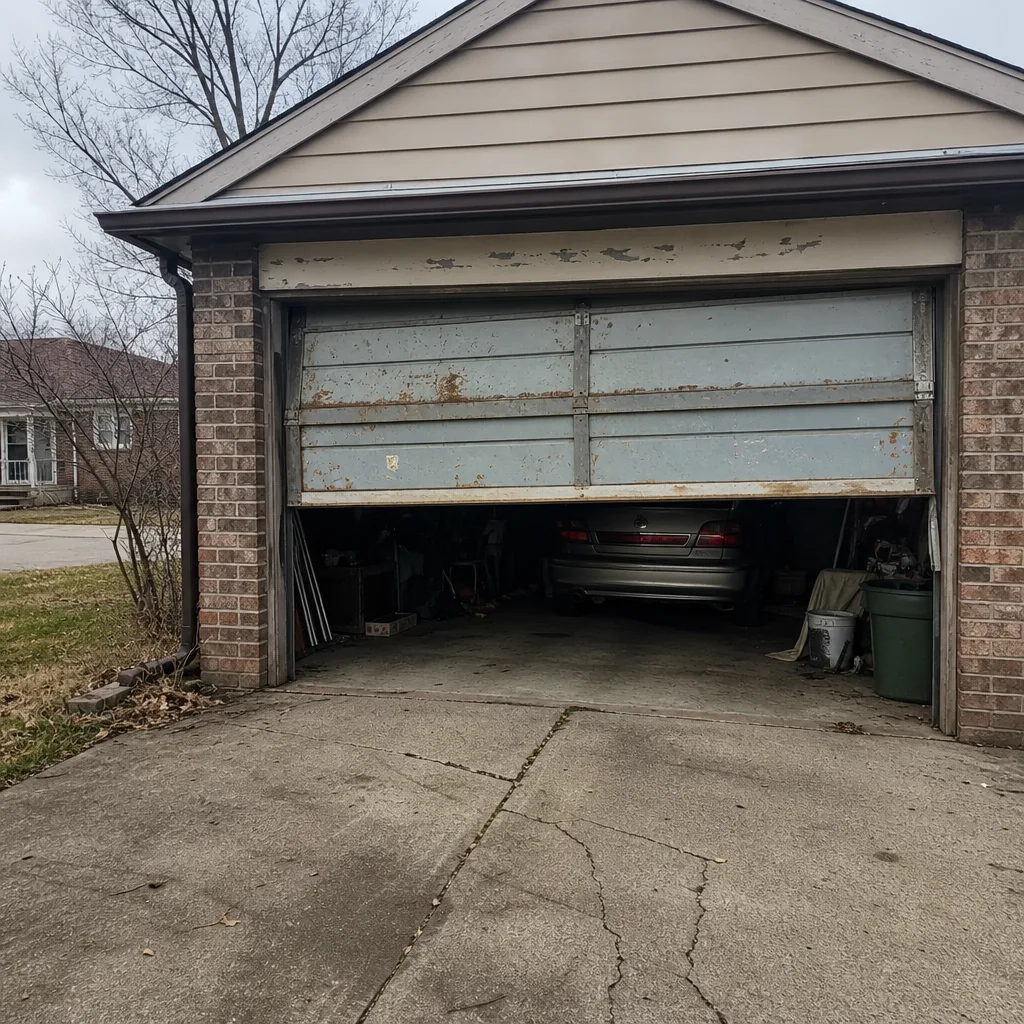 Before
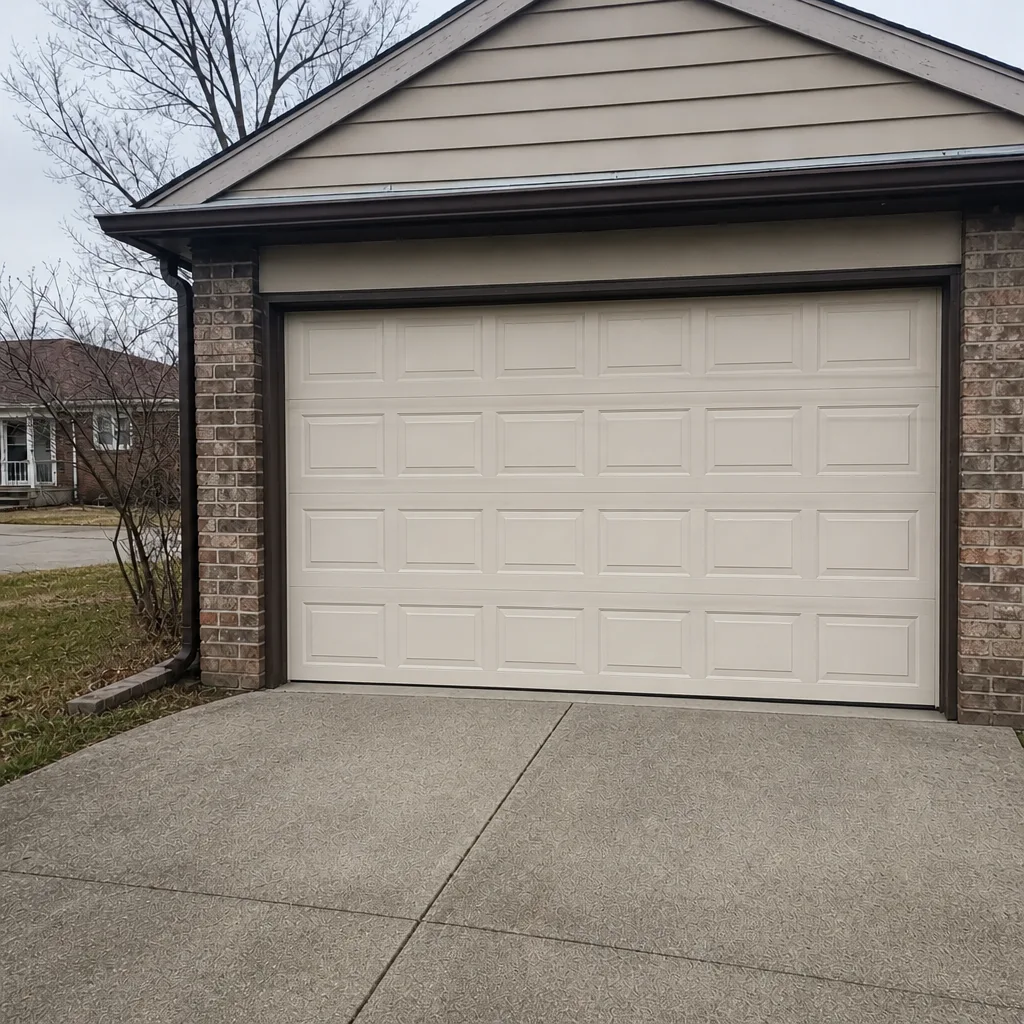 After
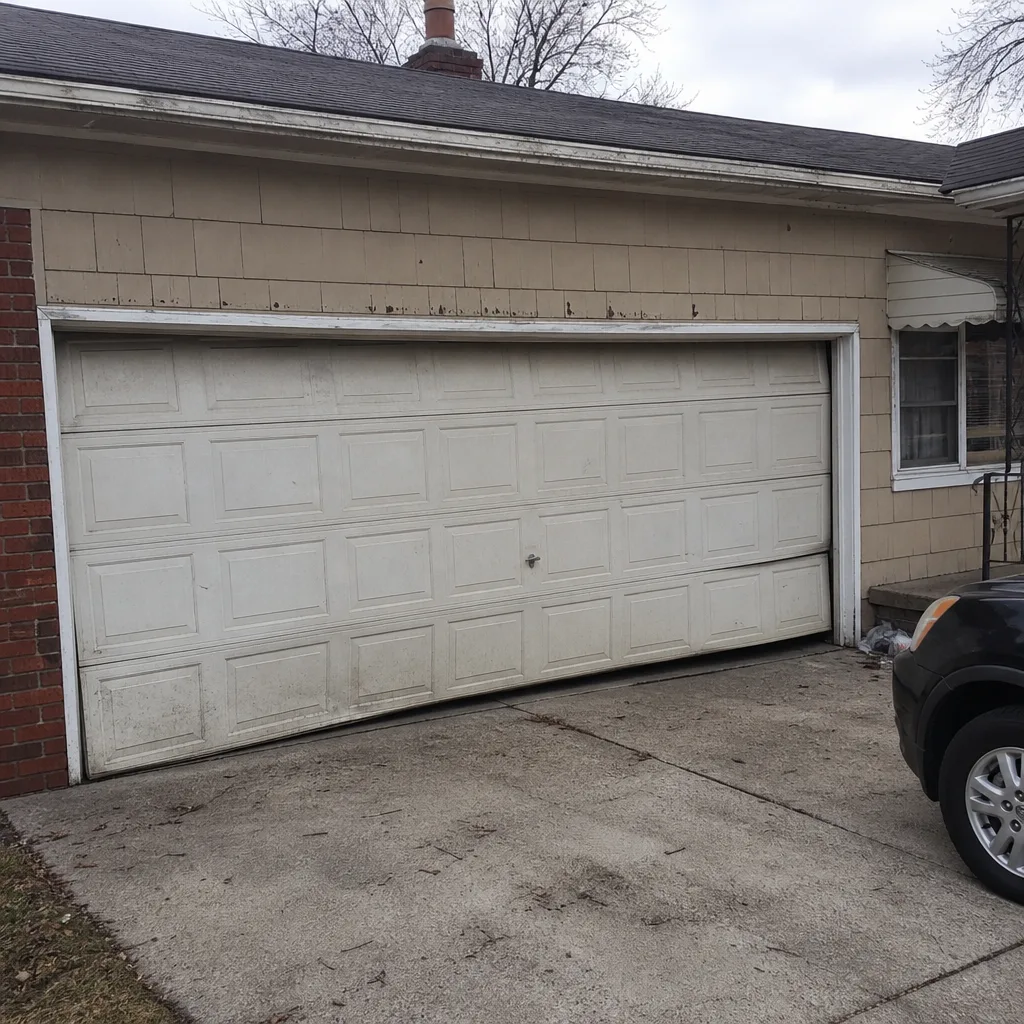 Before
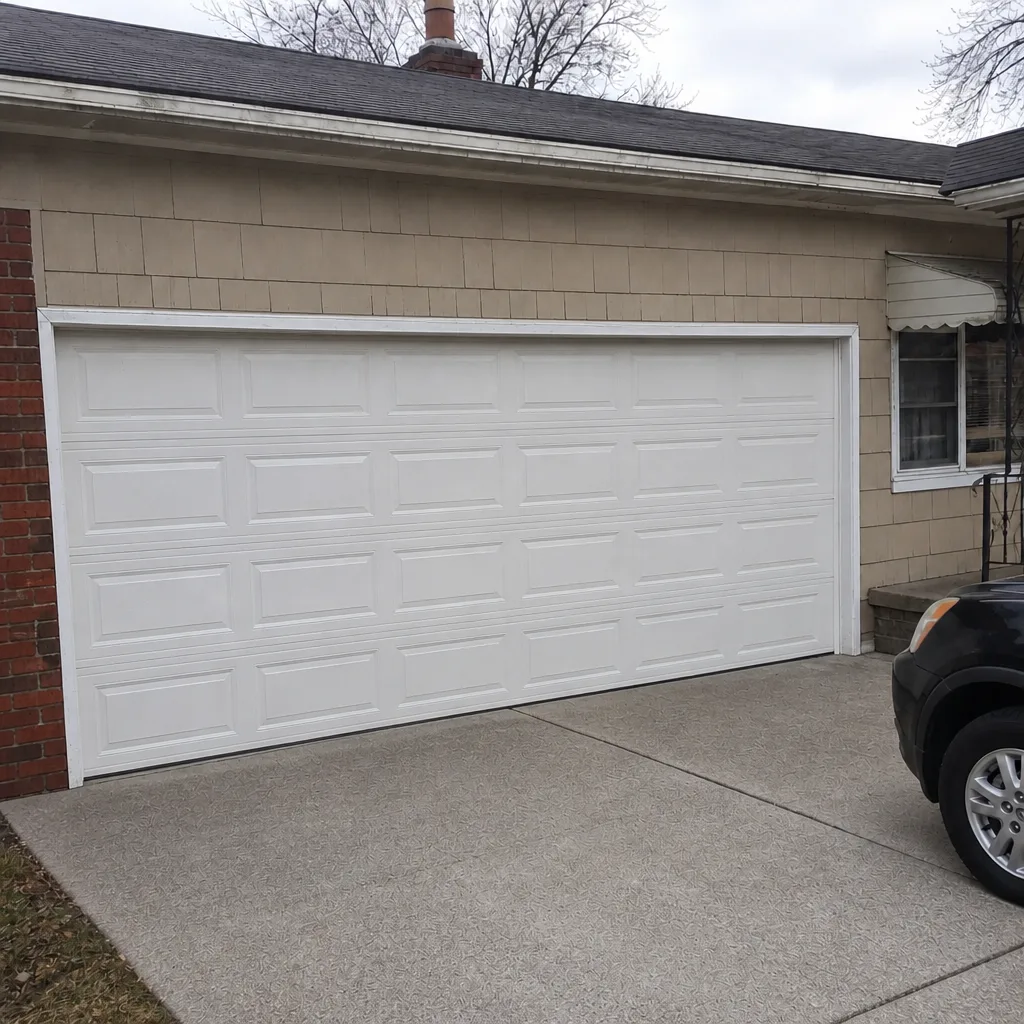 After
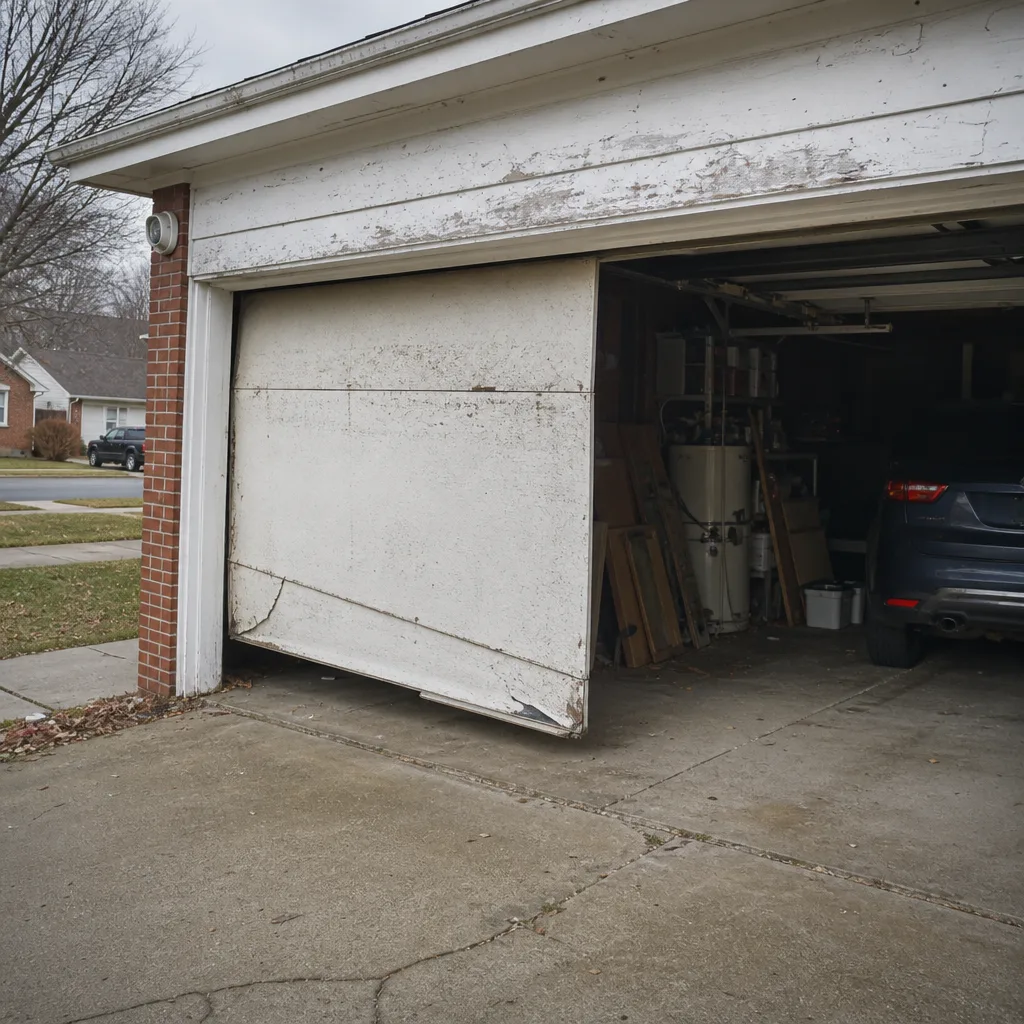 Before
 After
When to Call a Professional
Call us when a spring is broken or looks stretched, when a cable is off its drum, when the door is off its track, when the opener runs but the door doesn’t move, or when your door reverses unpredictably and the safe adjustments haven’t fixed it. Call when the door is post-2000 Wayne Dalton or Craftsman and you’ve been told by someone else that they don’t service it. Call when the door is too heavy to lift by hand with the opener disconnected, or when the opener light flashes a fault code you can’t decode. Warren Garage Door Service offers free estimates in Warren. Call (866) 942-9754, and we’ll tell you what’s wrong and what it takes to fix it. We answer 24/7. Fast dispatch from 7am to 7pm, Sunday through Friday.
Frequently Asked Questions
That’s usually friction, not an opener failure. Cold weather thickens the lubricant in the hinges and rollers, and the opener’s overload protection trips when the load gets too high. A door that needs no repair in summer can bind in a hard freeze because the grease has stiffened and the metal has contracted. A technician can confirm whether it’s a lubrication issue, a tension problem, or an opener board fault.
They’re different failures with the same-sounding symptom. Immediate reversal on contact usually means the safety reverse is working and the door is hitting something too early, often a close-limit setting or an obstruction. Reversing halfway through travel usually means the door is binding on a track or a roller and the opener reads that resistance as an obstacle. Same complaint, opposite causes, opposite fixes.
No. Torsion springs and the cables that run through them are under extreme stored tension, and incorrect handling can cause serious injury. This is the one category of garage door repair that should always go to a trained technician. We can diagnose the failure over the phone and get a spring replacement scheduled, and we stock the correct spring for the door’s weight and cycle count.
Yes. We’re trained and equipped to work on the eight most widely-owned brands in residential homes: LiftMaster, Chamberlain, Genie, Clopay, Amarr, Wayne Dalton, Craftsman and Raynor. That means your opener brand is covered before you call, and you don’t have to hunt for someone who works with the system you already own. Installing a new door? We fit Clopay and Amarr, two of the most trusted names in residential manufacturing.
No, they’re priced separately because they’re different jobs. A spring replacement is priced per spring, and a matched pair is usually replaced together, so a pair costs about twice a single-spring price. An opener repair is priced on the specific fault: a gear replacement costs less than a control board replacement. We give you a written estimate before any work starts, and the written estimate sets the final price.
An off-track door shifts sideways in the frame, and a roller may be visibly out of its channel. A noisy door still travels in a straight line but grinds, scrapes, or rattles on the way. If the door has shifted out of alignment, don’t run the opener; the track can bend further and the door can drop. If it’s only noisy, lubricate hinges and rollers with silicone spray and see if the sound changes before calling.
The Bottom Line
Most garage door failures in Warren fit one of four categories, and matching your symptom to the category is the fastest path to the right fix. Work through opener and electrical first, springs and cables second, tracks and rollers third, sensors and reverse last. Count the sounds, check the flash code, and know your hard-stop line: any repair that involves relieving spring tension goes to a technician. The rest you can handle. Brand matters less than diagnosis. Whether your door is a Clopay, an Amarr, a Wayne Dalton, or something older, we work on the door you have and repair first, replace only when necessary. When you’d rather not guess, Warren Garage Door Service is one call away, and a free estimate tells you exactly what’s wrong.
Call (866) 942-9754 for a free estimate. We answer 24/7. Fast dispatch from 7am to 7pm, Sunday through Friday. For homeowners across Warren and the surrounding neighborhoods, spring repair, opener repair and track service are what we do, and the price is quoted in writing before any work starts.
Written by the team at Warren Garage Door Service.