
Last updated November 16, 2026
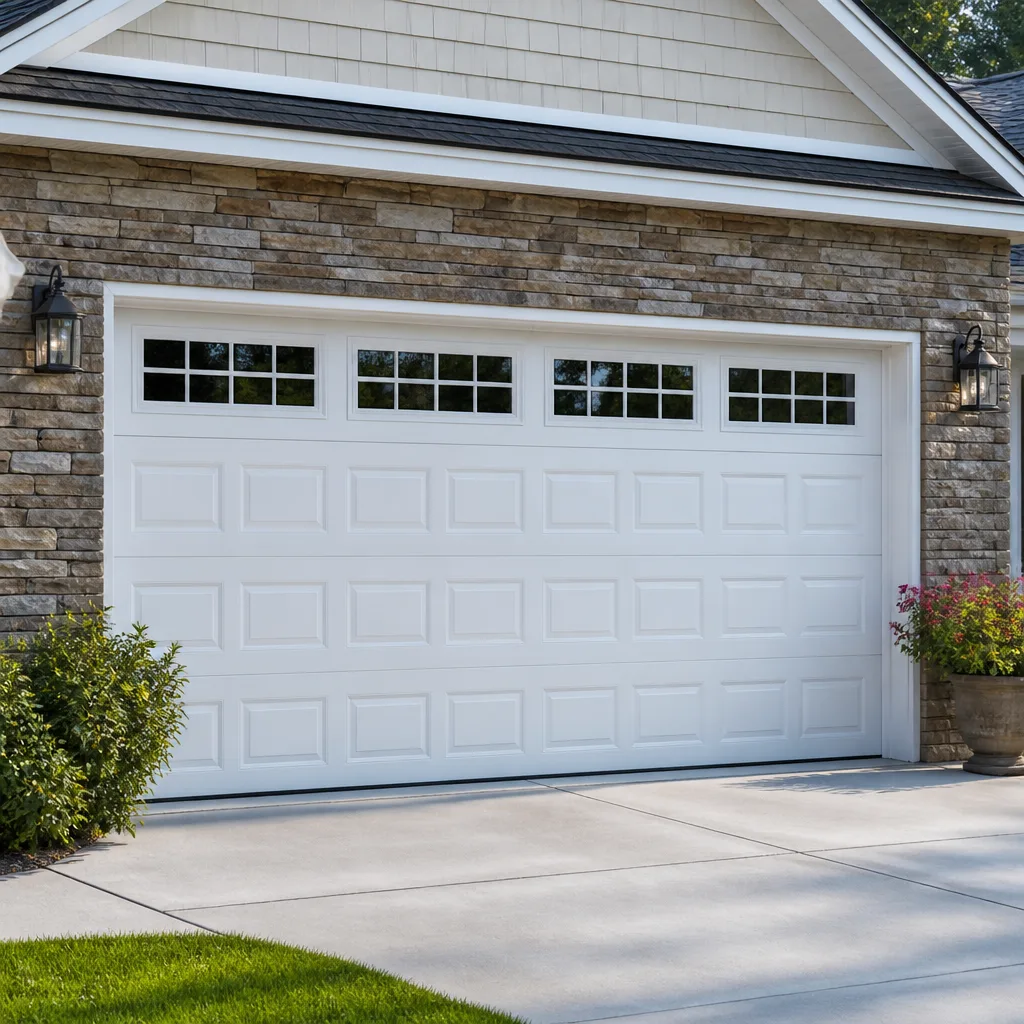 Raised-panel steel
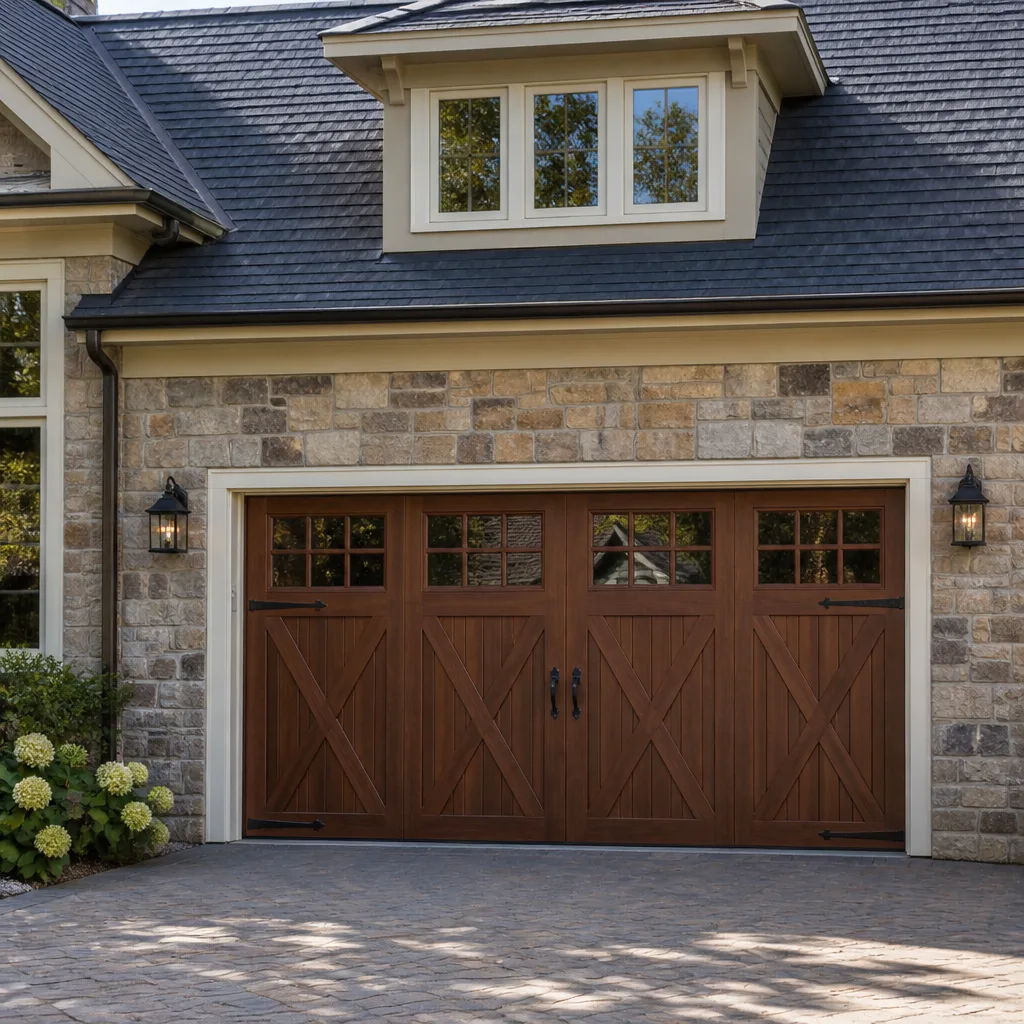 Carriage house
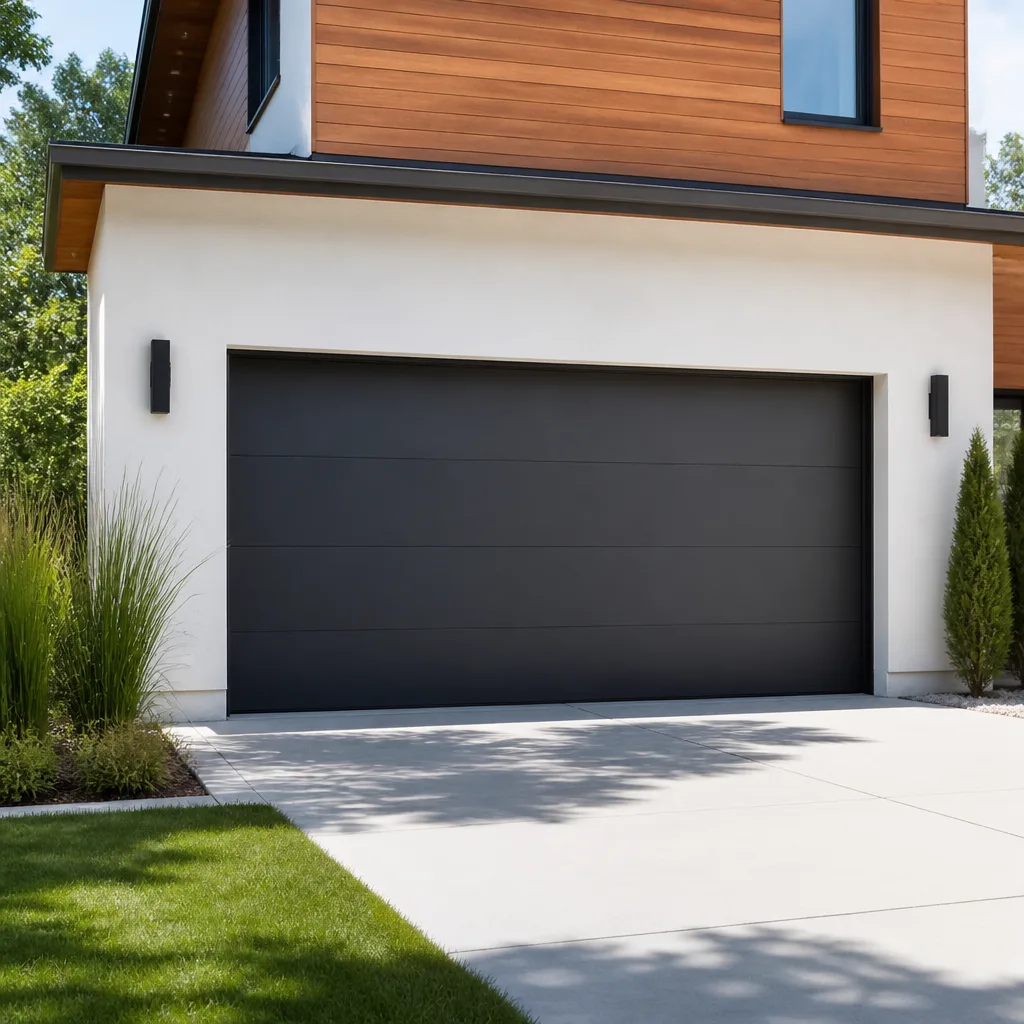 Modern flush
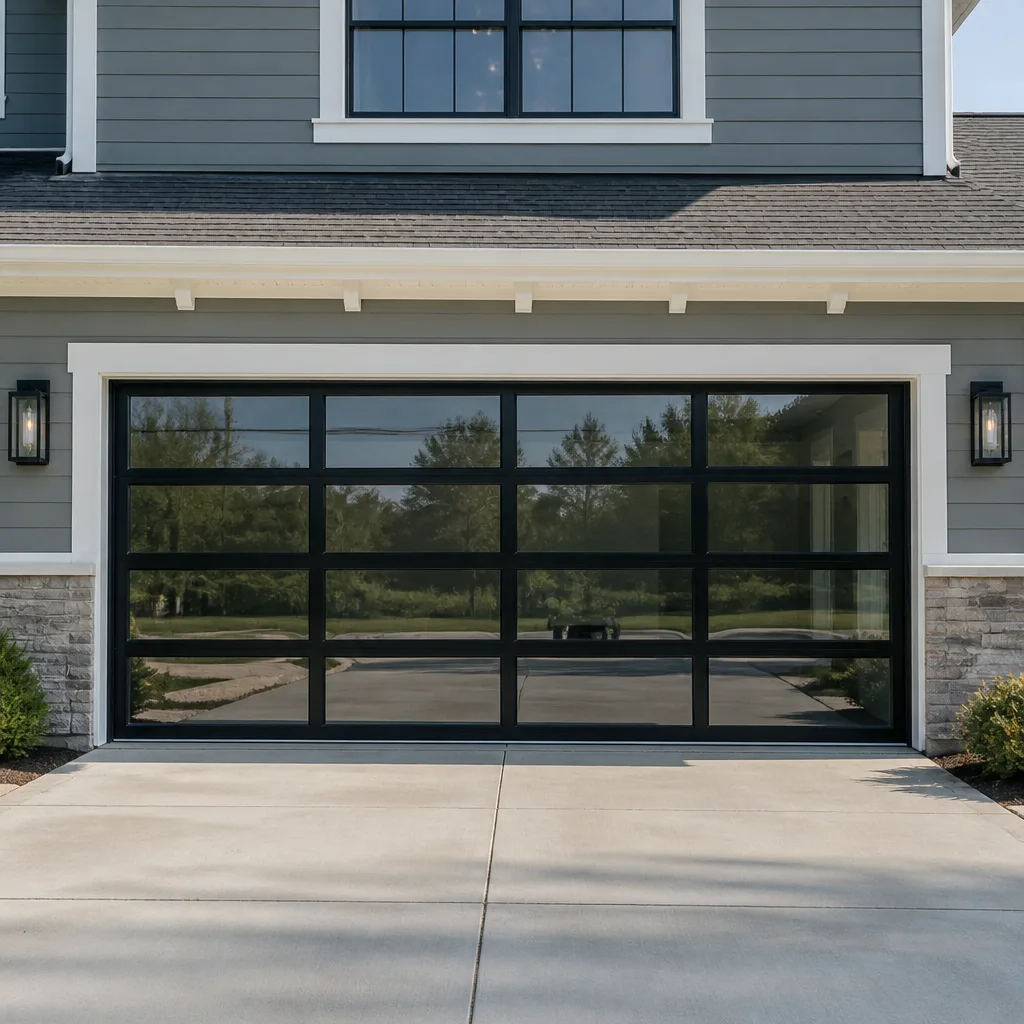 Full-view glass
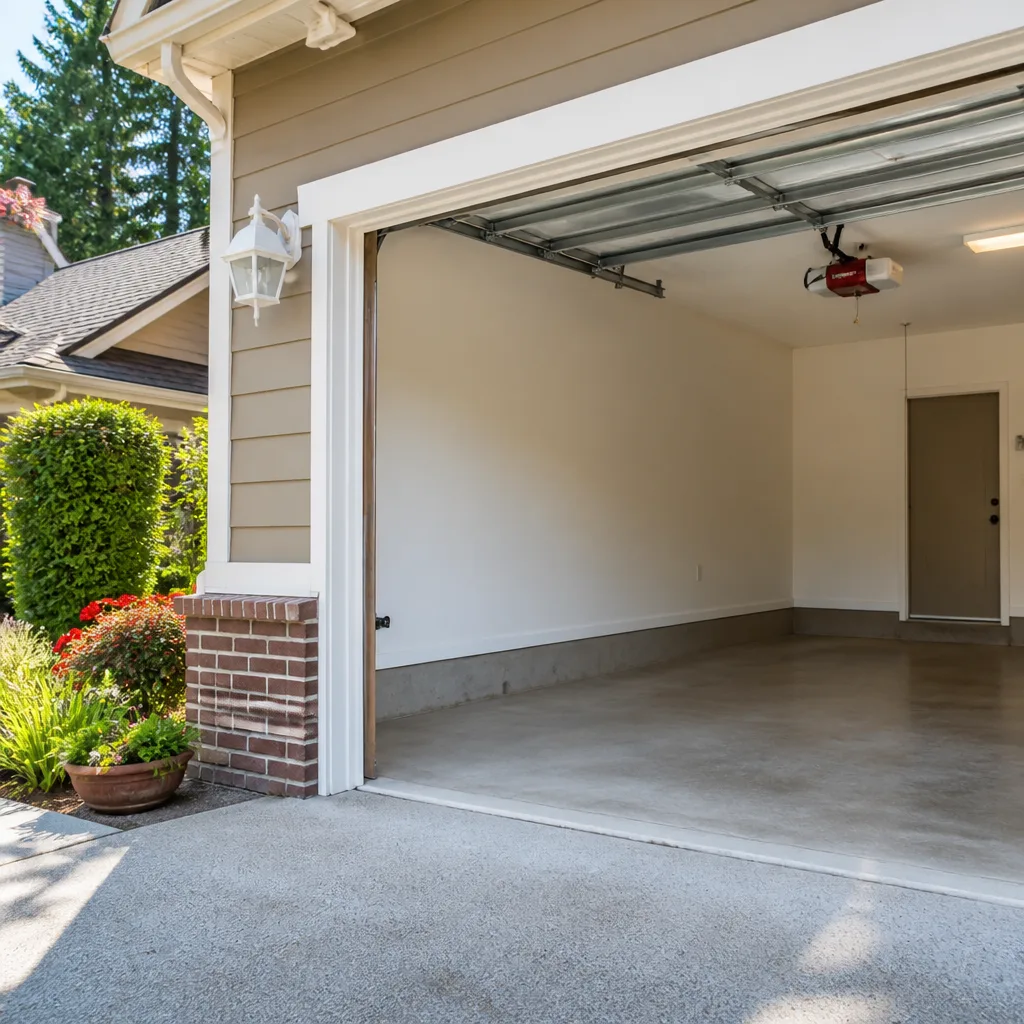 LiftMaster openers
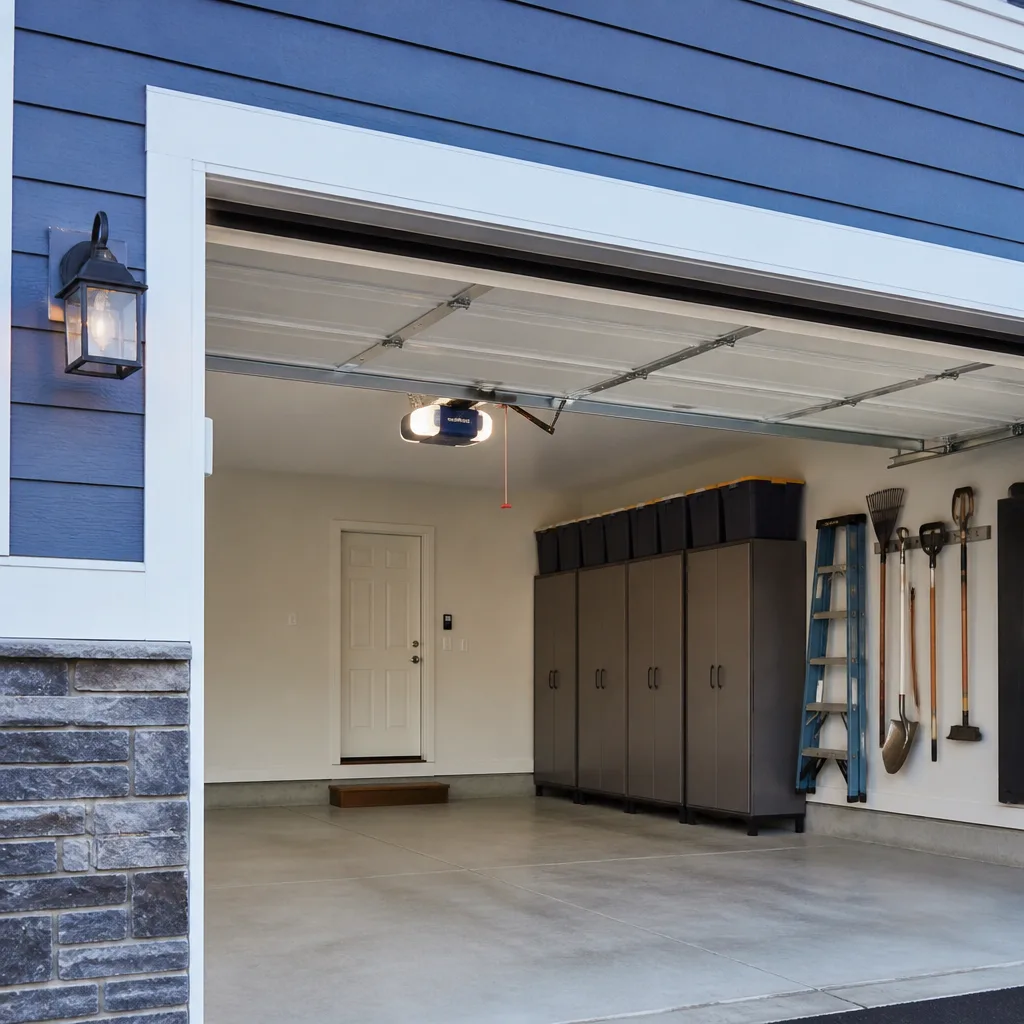 Chamberlain openers
Full 25-point door and opener safety check with every visit - springs, cables, rollers, tracks, and your LiftMaster or Chamberlain opener included
You get a price before we start. It does not change when the pro arrives.
Get your free estimateGarage Door Emergency Preparedness Guide for Warren Homes
Most Warren homeowners assume their garage door will always open. That’s the misconception worth correcting first. Every automatic door is one power outage, one broken spring or one bumper tap away from being stuck, and the moment it happens is the worst time to figure out how your specific system behaves. The red release cord that seems like the obvious answer can actually be dangerous on a door with a broken spring. In this guide, we’ll walk through what actually happens when a garage door fails in Warren, how to release it safely, what to do after a vehicle impact, how to handle winter-specific failures, and what information to have ready when you call. Read it once now, before you need it.
Quick Answer
If your garage door won’t open, the right first move depends on why. A power outage means the manual release is safe to use on a door with intact springs. A broken spring means the door should stay closed until a technician arrives, because the manual release can drop the door. A vehicle impact or a door hanging off its track means don’t touch it and call for help. Knowing which situation you’re in before you pull anything is what keeps a repair from becoming an injury.
Styles & brands we work with
- Raised-panel steel
- Carriage house
- Modern flush
- Full-view glass
- LiftMaster openers
- Chamberlain openers
Table of Contents
- How your garage door actually works during an emergency
- The manual release: how to use it safely, and when not to
- Power outage response for Warren homes
- What to do after a vehicle impacts your garage door
- Winter emergencies specific to Warren
- How to temporarily secure a compromised door
- What to have ready when you call for emergency service
- Common mistakes to avoid
How Your Garage Door Actually Works During an Emergency
A sectional garage door is a balancing act. The springs, whether torsion above the door or extension along the sides, carry most of the door’s weight so the opener only has to lift the remainder. That’s why a door with healthy springs feels light when you lift it by hand, and why a door with a broken spring feels like it weighs several hundred pounds. It does.
When something fails, the failure tells you what’s safe to do next. There are four common failure modes in Warren homes:
- Power failure. The door is fine, the opener has no electricity. The door is still balanced and safe to operate by hand once released.
- Broken spring. You’ll usually hear a loud snap from the garage and find the door stuck closed or stuck partway. The door is no longer balanced. Do not release it.
- Off-track or bent door. Usually the result of an impact or a worn roller. The door is physically misaligned and shouldn’t be forced.
- Opener failure. The motor runs but the door doesn’t move, or the door moves erratically. Common in older Craftsman and Raynor units as the drive gear or logic board ages.
Identifying which of these you’re looking at takes about thirty seconds and determines everything that follows. If you’re not sure, treat it as a spring or track failure and leave the door alone. Our technicians have up to 12 years of experience diagnosing exactly this kind of “what just happened” call, and we work on the door you already have rather than pushing a replacement.
One thing worth doing long before an emergency: find your manual release cord now, confirm it isn’t tangled or frozen, and check that the door opens and closes smoothly by hand once a season. For a full walkthrough of what routine maintenance covers, see our garage door repair page.
The Manual Release: How to Use It Safely, and When Not To
Every automatic opener has a manual release, usually a red cord hanging from the trolley that rides the rail. Pulling it disconnects the door from the opener so you can lift the door by hand. It’s the single most useful emergency feature on your system and the single most misused one.
Here’s the safe procedure for a door with intact springs, during a power outage or an opener failure:
- Close the door fully first. Never pull the release with the door open or partway up. The door needs to be down and at rest.
- Stand clear of the door’s path and keep children and pets away. The door will be heavier than it looks once disconnected.
- Pull the cord straight down with one firm motion until the trolley releases. You should hear a click.
- Test the weight. Lift the door about a foot by hand. If it feels heavy, stop. The springs aren’t carrying their share and the door shouldn’t be raised.
- Lift with both hands, slowly, and prop the door open only if you need to move a vehicle. Otherwise lower it back down.
- To reconnect, bring the door down fully, then re-engage the trolley by pulling the cord toward the opener until it clicks. Test with the opener before trusting it.
When the manual release is not safe
If you suspect a broken spring, do not pull the release cord. The springs are the only thing holding the door’s weight. Disconnect the door and it can come down hard and fast, and a garage door panel weighs enough to cause serious injury. Broken springs are also the one part of this trade we strongly recommend leaving to a trained technician, because the torsion springs and cables are under high tension even when the door is down. The same goes for a door that’s visibly off its track or hanging unevenly.
If your door is stuck with a suspected spring failure, leave it closed, keep vehicles outside if you can, and call for help. Our garage door opener repair technicians can often diagnose over the phone whether what you’re describing is a spring, a track or an opener issue before anyone drives out.
Power Outage Response for Warren Homes
Warren gets its share of storm-related outages, and a dead opener is the most common “emergency” call we get that isn’t actually an emergency. The door is fine. The house just lost power. Here’s how to handle it calmly.
- Confirm it’s the house, not the opener. Check whether lights in the garage are out too. If the lights work and only the opener is dead, it’s an opener or outlet problem, not a power outage.
- Use the manual release only if springs are intact. Follow the procedure above. If you heard a snap when the power went out, treat it as a spring failure and leave the door alone.
- Most modern openers have a battery backup. If yours has one, the door may still operate on battery for a period after the outage begins. LiftMaster and Chamberlain units often include this, though the battery degrades over time and needs replacement.
- Don’t cycle the door repeatedly on backup power. The backup is meant for a few open-close cycles, not a day of use.
If the power comes back and the opener still doesn’t respond, the outage may have damaged the logic board or the safety sensor alignment. That’s when a quick diagnostic is worth the call. In our experience, a door that worked fine before an outage and doesn’t work after is usually a sensor or board issue rather than a mechanical failure, and it’s often a one-visit fix.
Keep a flashlight and a pair of work gloves in the garage. If your garage is on the same circuit as a sump pump or freezer, know how to reset the opener’s travel limits after power returns, because some units need to be re-taught their open and close positions. If you’re not comfortable doing that, a technician can recalibrate it in the same visit as any other repair.
What to Do After a Vehicle Impacts Your Garage Door
A bumper tap, a misjudged park, a teenager learning to drive: vehicle impacts are more common than you’d think in Warren. The good news is that most low-speed impacts damage panels and hardware rather than the structure. The bad news is that the damage isn’t always obvious.
Immediate steps after an impact:
- Stop and turn the vehicle off. Don’t try to reverse away from a door that may now be wedged against the vehicle.
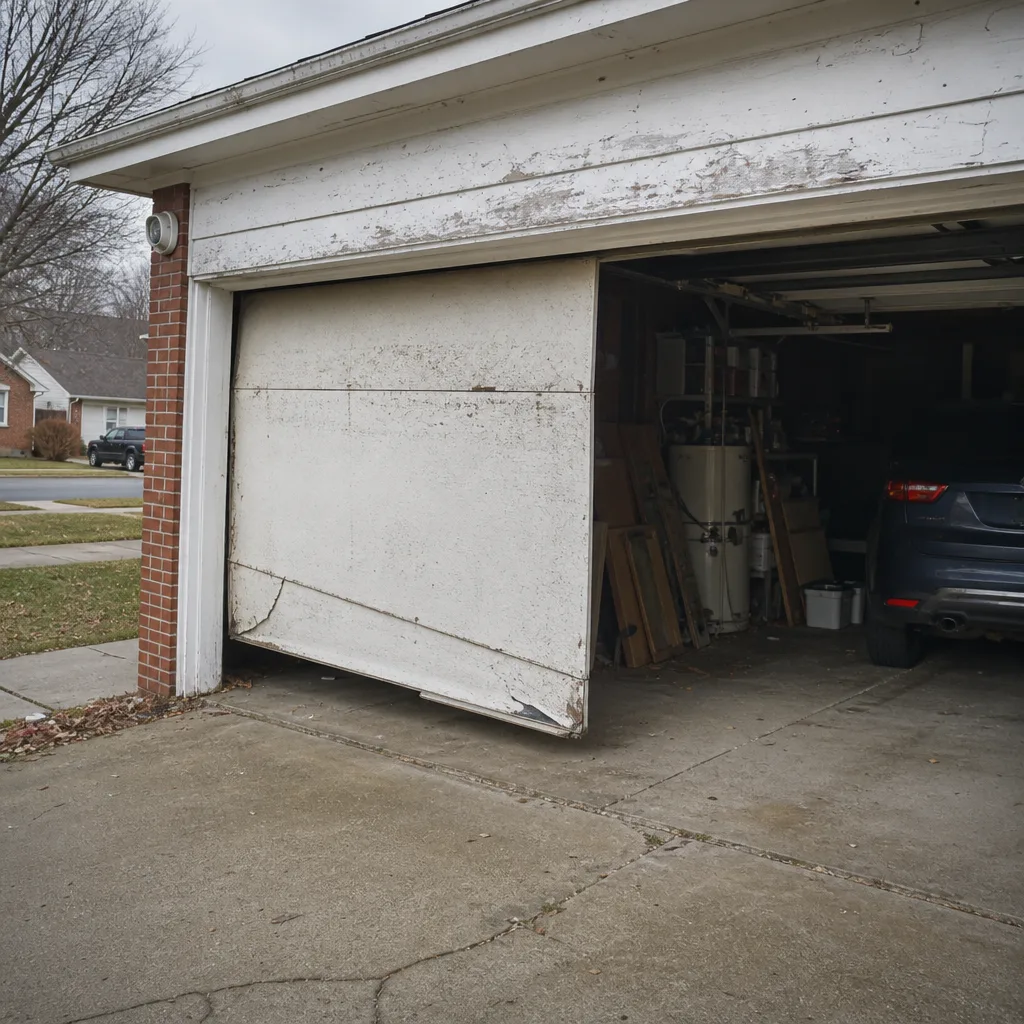
- Look for hanging panels, bent tracks or broken glass before anyone gets near the opening. A panel can fall.
- Don’t try to operate the door with the opener or by hand. An impacted door is off its intended alignment and running it can bend panels or damage the opener.
- Photograph everything for your insurance company before anything is moved or repaired.
- Call for a professional assessment. A technician can tell you whether the tracks, rollers, hinges and spring system are still sound or whether the door needs to be replaced.
Structural versus cosmetic damage
Cosmetic damage is a dented or scratched panel where the door still sits square in the opening and the tracks are straight. Structural damage is anything that changes the door’s geometry: bent tracks, a door that’s angled in the opening, a spring that’s visibly displaced, or a wall that’s cracked where the track is bolted. If you see any of the structural signs, don’t touch the door.
We’ve worked on plenty of impacted doors where the homeowner assumed they needed a full replacement and a new panel or two plus hardware did the job. On the other side, we’ve seen a “minor” hit that had bent the vertical track just enough that the door was about to jump its rollers. This is where a brand-neutral assessment matters. Our team is happy to look at whatever door you already have, whether that’s a Clopay, Wayne Dalton or anything else, and tell you honestly whether repair will do.
Winter Emergencies Specific to Warren
Michigan winters hit garage doors in ways that don’t show up in the summer months. The failures we see most in Warren are frozen doors, ice-damaged seals and cold-weather opener faults.
A door frozen shut
The bottom seal freezes to the concrete floor or the door freezes to the frame. The opener tries to lift, the door doesn’t budge, and the motor strains. Stop cycling the opener immediately, because repeated failed lifts can burn out the motor or strip a gear. Don’t force the door with a pry bar, since that bends panels. Instead, clear snow and ice from around the outside of the door, then use a heat source cautiously to thaw the seal or frame. Once it’s free, check the bottom seal for damage before closing the door again.
Ice-damaged bottom seals
The rubber or vinyl bottom seal is the part most vulnerable to freeze-thaw cycles. When it tears or hardens, it no longer seals, and you get cold air, water intrusion and eventually a draft issue. Replacement of a bottom seal is a small job compared to what happens if the tear lets in enough water to rust the bottom section of the door.
Opener failure in extreme cold
Cold-weather opener issues usually fall into two categories: the lubricant inside the drive mechanism thickens and the motor struggles, or a sensor or logic component fails in the cold. If your opener runs in summer and not in winter, that’s a sign something needs attention, not necessarily a full replacement. Genie and LiftMaster openers in particular have consistent cold-weather behaviors that a technician familiar with the brand will recognize quickly.
Preventive steps for a Warren winter: clear snow from the door’s travel path after every storm, keep the inside of the garage dry, and check the bottom seal for cracks before the first hard freeze. If your door lives under a north-facing overhang, you’ll see more ice buildup and should clear it more often. Every winter in Warren, a good share of our repair calls come down to things a homeowner could have caught with a five-minute look in the fall.
How to Temporarily Secure a Compromised Door Overnight
Sometimes the door can’t be repaired the same day. Maybe parts need to be ordered, maybe you found the problem late. A compromised garage door is a security problem, and you need a safe way to hold it closed until a technician can get there. Here’s what works and what doesn’t.
Safe temporary measures:
- Use a heavy-duty C-clamp on the vertical track just above a roller, on both sides if possible. This physically stops the door from being lifted even if the opener engages.
- Vise-Grips or a locking clamp on the track works the same way as a C-clamp.
- Park a vehicle close to the door, inside or outside, as a secondary barrier. This isn’t a lock, but it deters someone from trying to lift the door.
- Reconnect the manual release immediately if you disconnected it and the springs are intact, so the opener can hold the door closed.
What doesn’t work and hurts the door:
- Prying the door closed with a bar bends panels and misaligns tracks.
- Wedging wood under the door can shift the door off its track and cause more damage than the original problem.
- Duct-taping or tying the door in place doesn’t hold weight and can fail suddenly.
If the door is hanging off its track or has a broken spring, don’t try to move it at all. Call and get on the schedule for the next opening. If it’s evening or a day we’re closed, we can still take the call. We answer 24/7, and a job that comes in outside dispatch hours gets booked into the next opening, Sunday through Friday, 7am to 7pm.
What to Have Ready When You Call for Emergency Service
The fastest way to get your door fixed is to tell us enough on the phone that the technician arrives with the right parts the first time. In our experience, a call that includes the right details saves a follow-up visit more often than not. Here’s what to have ready.
- What happened. Was it a power outage, a spring snap, an impact, a track problem or an opener issue? What were you doing when it failed?
- What the door is doing now. Fully closed, stuck partway, hanging at an angle, or making a noise when the opener runs?
- The door brand and approximate age. If it’s a Clopay, Amarr, Wayne Dalton, Raynor, or anything else, tell us. If you can see the opener brand too, even better. This tells us what parts are likely involved.
- The opener model and any smart features. A LiftMaster, Chamberlain or Genie unit with a battery backup or app control has different failure points than a basic opener.
- Your address and whether the driveway is clear. If snow, a vehicle or debris is blocking access to the door, mention it so the technician can plan for it.
- Any safety concerns. Children, pets, a vehicle inside the garage, or a door you’re worried might fall.
The more specific you are, the better the technician can prepare. That’s part of why Warren handles everything under one name, from repair to opener work to new installation, rather than passing you between contractors who each handle a slice of the job.
Common Mistakes to Avoid
- Pulling the manual release on a door with a broken spring. This is the most dangerous mistake homeowners make. The spring is holding the door’s weight, and releasing the opener lets that weight come down.
- Forcing a frozen door open with the opener. Repeated straining can burn out the motor or strip gears. If the door won’t move in a Warren winter, stop and thaw it before trying again.
- Assuming a car impact means full replacement. A surprising number of impacted doors just need new panels and hardware. Get an assessment before you assume the worst.
- Leaving the door off its track overnight without securing it. An unsecured garage door is an easy target and can also fall. Clamp the track and keep the door down.
- Ignoring a slow drain on opener behavior. If your opener struggles in cold weather or opens unevenly, that’s a warning sign, not a quirk. Catch it before it leaves you stuck.
- Calling a generalist for a brand-specific opener. Craftsman and Wayne Dalton systems from older Warren homes are often declined by contractors who only service the brands they sell. Reach someone who works on your brand before you assume nobody can.
- Trying to close a door that’s hanging at an angle. This is where a bent track becomes a bent wall. Stop, secure the door safely and call.
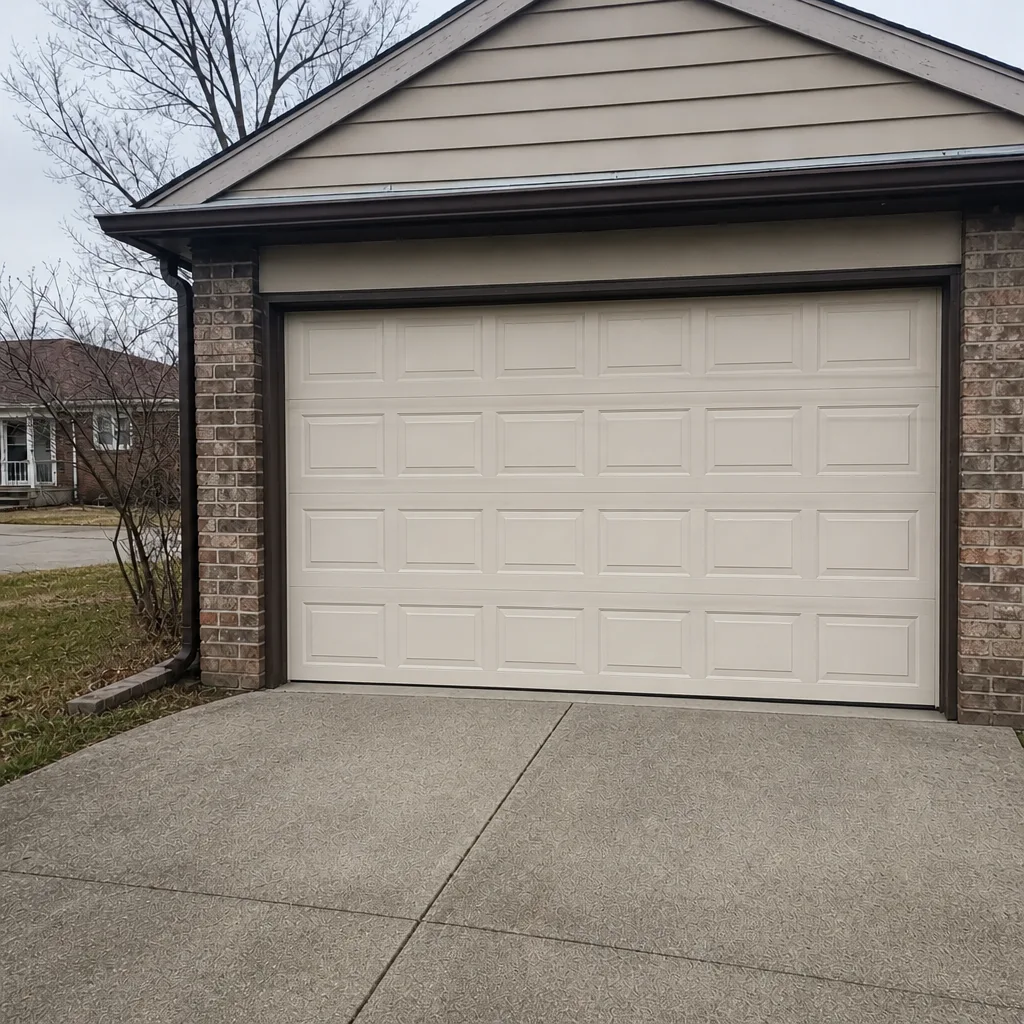
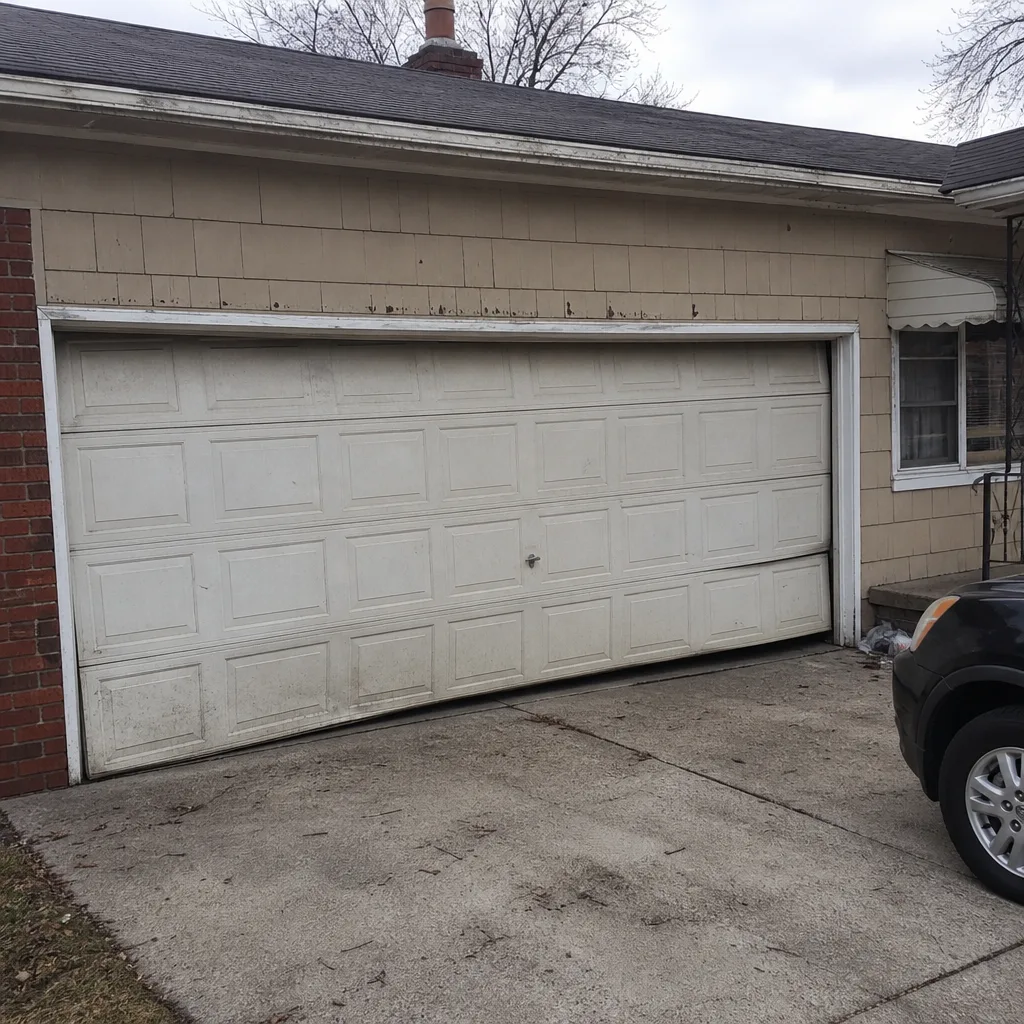
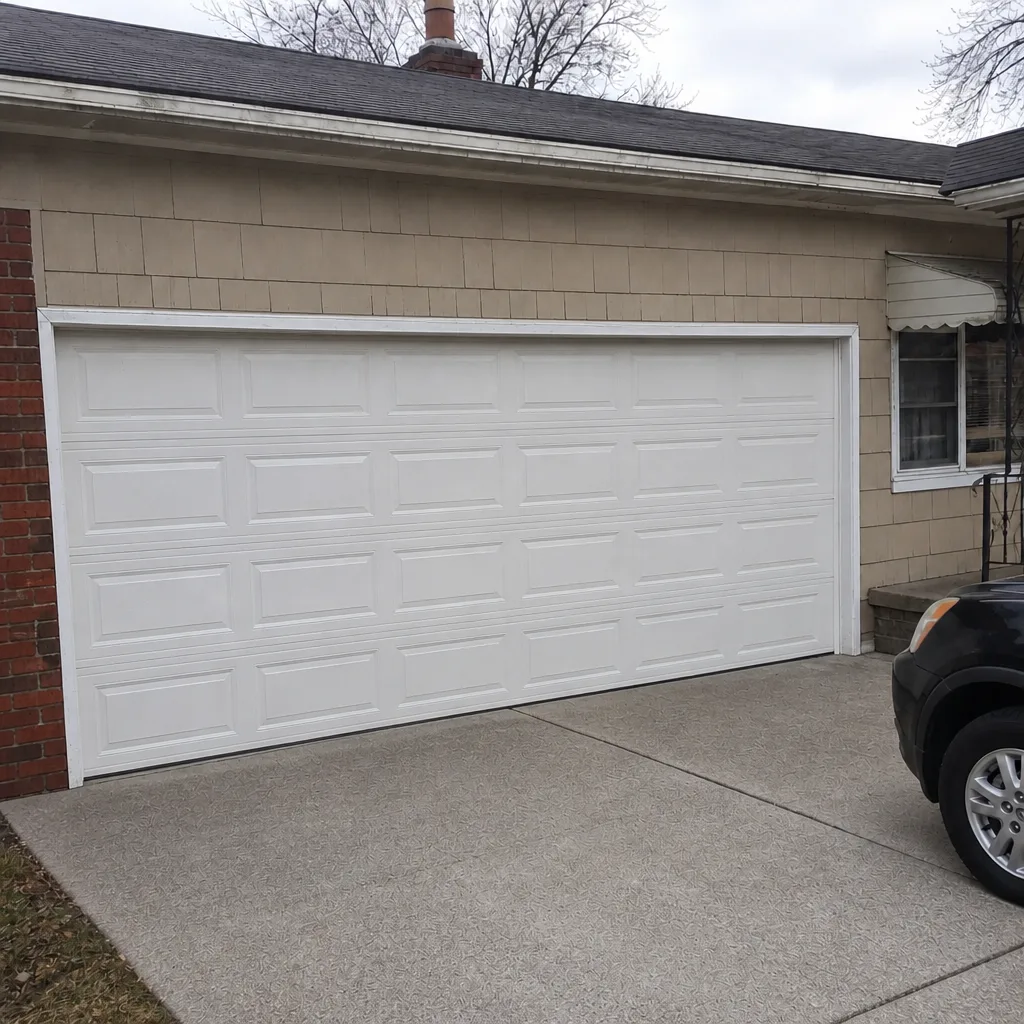
See the difference
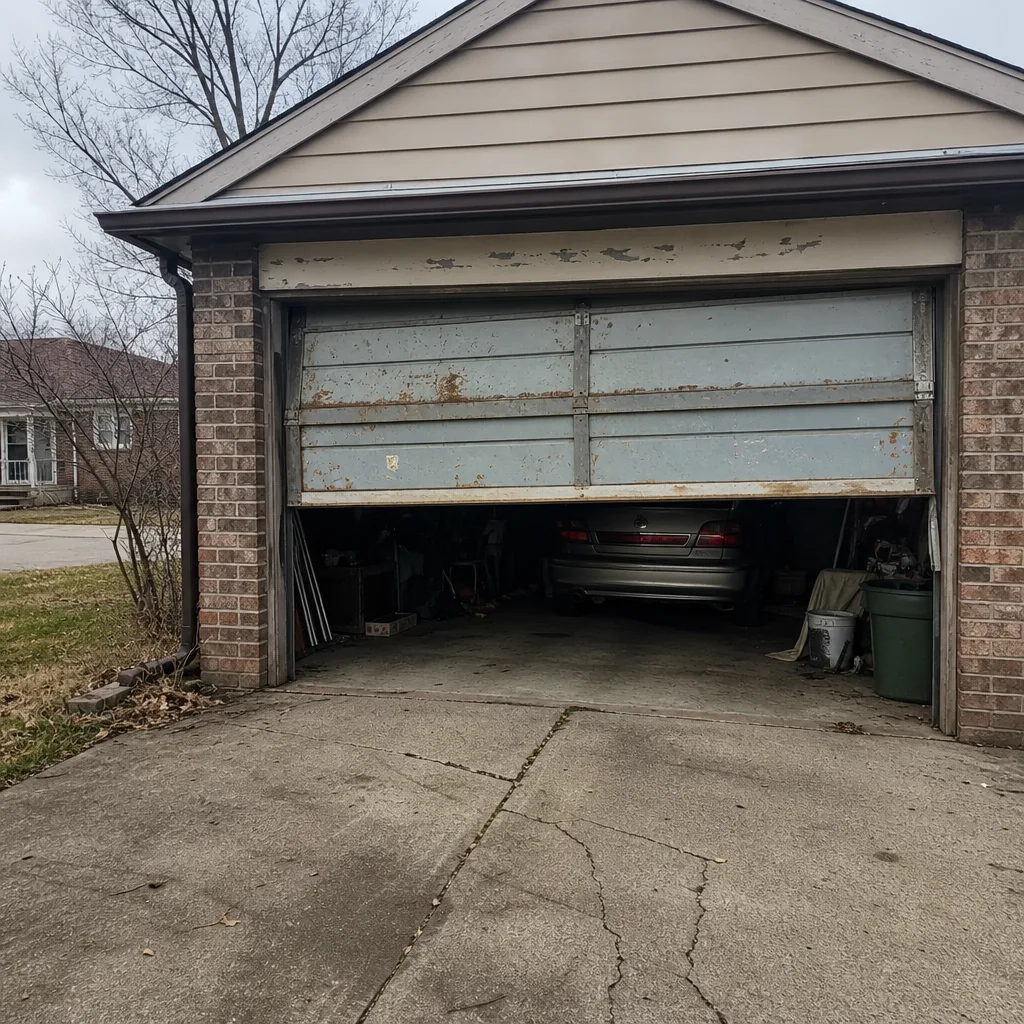 Before
 After
 Before
 After
 Before
 After
When to Call a Professional
You should call a professional when the door won’t move and you can’t tell why, when you hear a snap from the garage, when the door is off its track, or after any vehicle impact. Those are the situations where a knowledgeable technician is worth the call: springs and cables under tension, track alignment, opener logic boards and travel-limit settings. On our side, we’d rather answer a question that turns out to be nothing than see a homeowner get hurt trying to save a call. Warren Garage Door Service offers free estimates in Warren. Call (866) 942-9754. We answer 24/7, and fast dispatch runs from 7am to 7pm, Sunday through Friday.
Frequently Asked Questions
Yes, if your door has intact springs. Pull the manual release cord after closing the door fully, then lift the door by hand. If you heard a snap before the outage or the door feels heavy when you test it, don’t lift it; treat it as a spring failure and call for help. We answer calls 24/7, and fast dispatch from 7am to 7pm gets a technician out the same day when needed.
Stop the vehicle, look for hanging panels or bent tracks, and don’t operate the door. Photograph the damage and call for an assessment before trying to open or close it. A professional can tell you whether it’s a panel-and-hardware repair or whether the tracks and structure need attention.
No. A garage door with a broken spring should stay closed until a technician repairs it. The springs carry the door’s weight, and operating a door without them risks the door coming down hard. Leave the door alone and call for service; spring and cable work involves high tension that should be handled by a trained professional.
Cold weather in Warren causes two common failures: the bottom seal or door frame freezes to the floor, or the opener’s internal lubricant thickens and the motor struggles. Stop running the opener if the door won’t lift, clear ice and snow from the door’s path, and get it looked at if the door still won’t operate once it’s free.
Cosmetic damage is a dented or scratched panel with the door still square in the opening and the tracks straight. Structural damage shows as bent tracks, an angled door, displaced springs or a wall cracked where the track is bolted. If you see structural signs, don’t touch the door and call a technician. If your opener brand is a model that’s old, like a Craftsman or Raynor system, we still service it; you don’t need to replace the whole unit first.
Have ready: what happened, what the door is doing now, your door and opener brand if you know it, your address, and whether the driveway is clear. This lets the technician bring the right parts and reduces the chance of a return visit. Call (866) 942-9754 and we’ll ask exactly these questions so we can help you faster.
The Bottom Line
A garage door emergency is far less stressful when you’ve already thought it through. Know where your manual release is and understand that it’s only safe when your springs are intact. Know how to secure a door safely overnight if you can’t get help right away. Understand the winter failures specific to Warren and don’t force a frozen door. Have the right details ready when you call so a technician can arrive with the right parts. Whether your door is a newer Clopay or an older Craftsman system, the goal stays the same: repair first, replace only when repair won’t do. That’s how we work, and it’s why homeowners trust the team at Warren Garage Door Service to handle their emergency. If you’d like to know more about our work across the area, see our page on Warren.
Have a garage door problem now or want to get ahead of one? Call (866) 942-9754 for a free estimate. We answer 24/7, with fast dispatch from 7am to 7pm, Sunday through Friday. The price is quoted and agreed before any work starts, and we’ll always work on the door you already have before recommending a replacement. Emergency or not, we’re glad to take the call.
Written by the team at Warren Garage Door Service.