
Last updated November 16, 2026
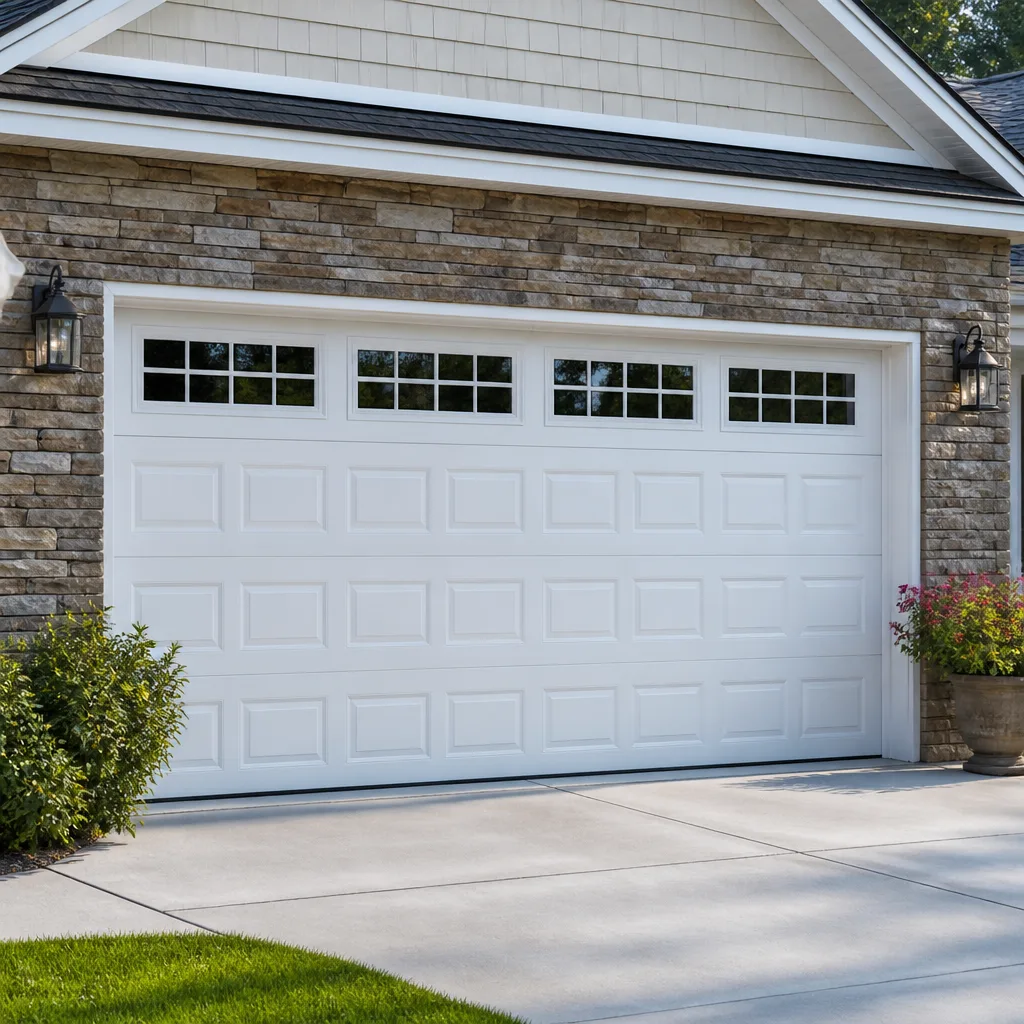 Raised-panel steel
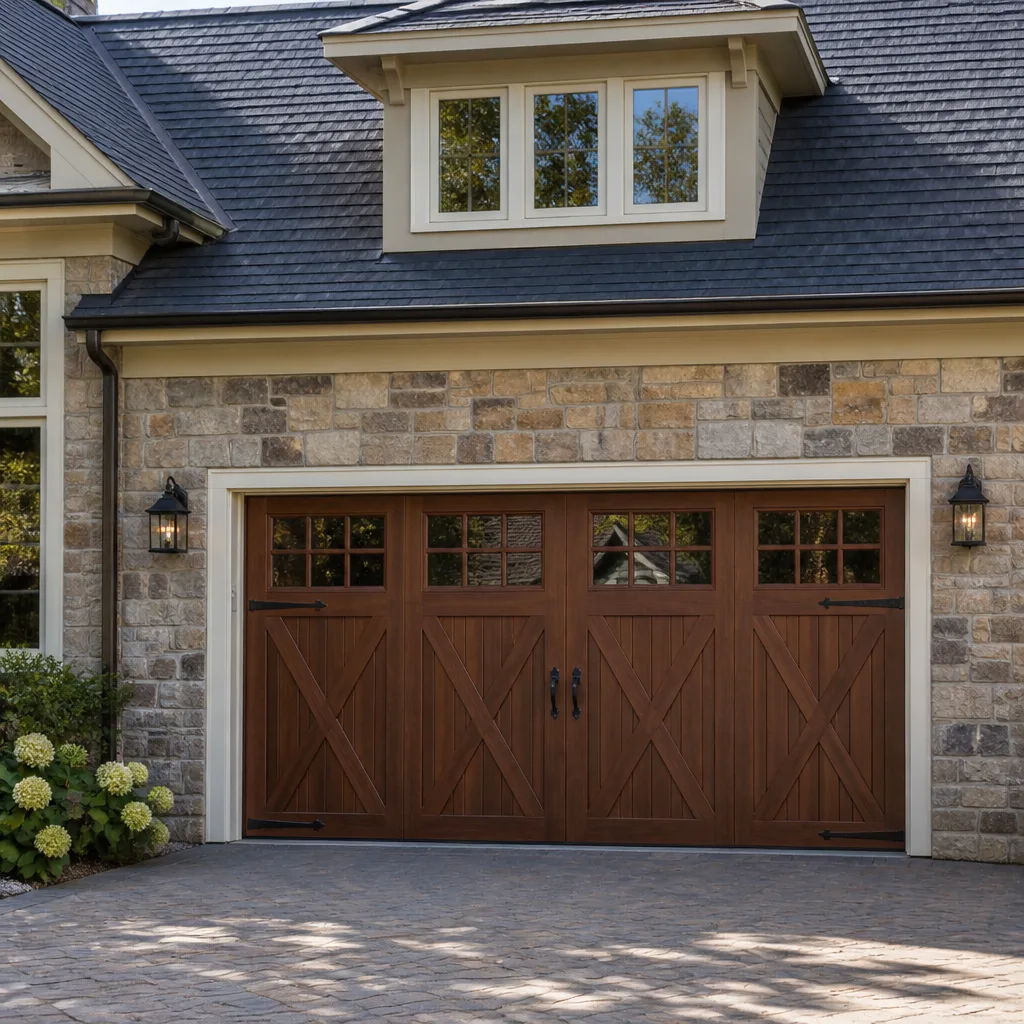 Carriage house
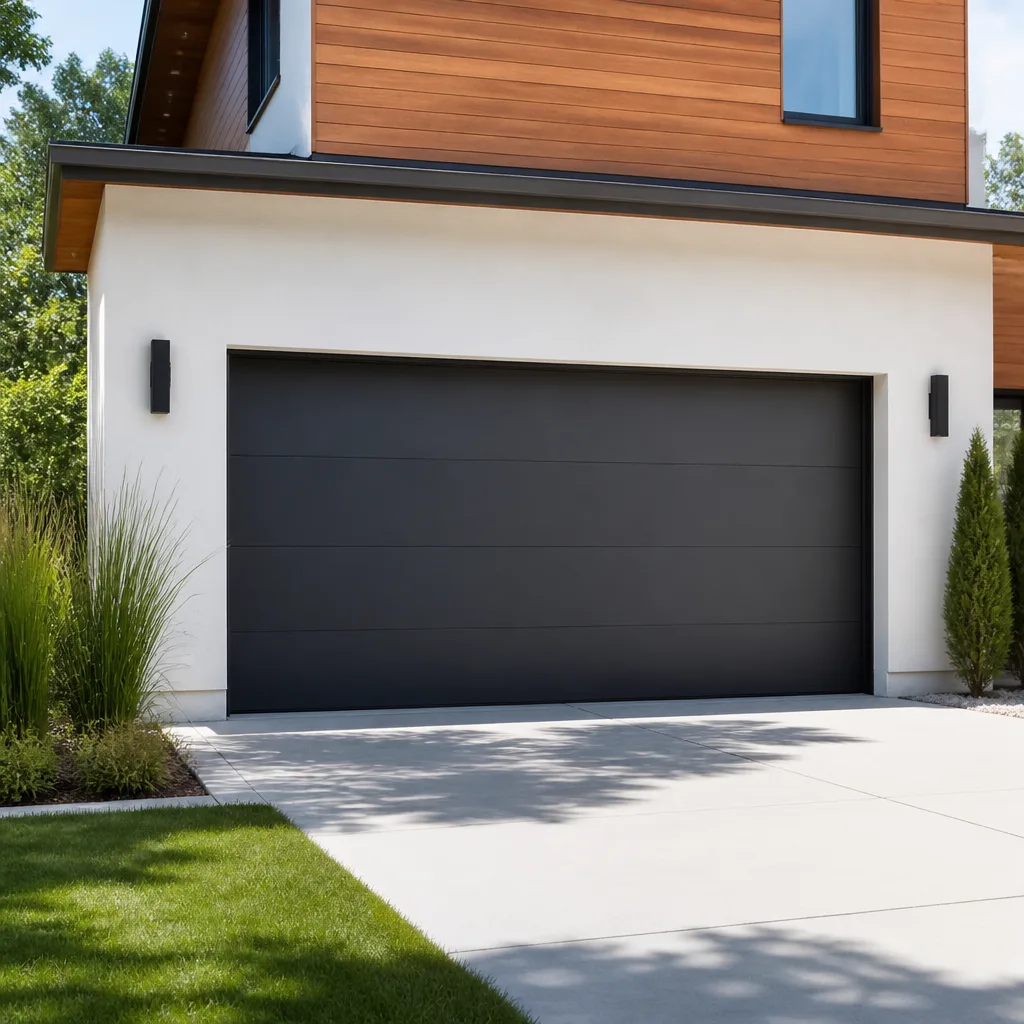 Modern flush
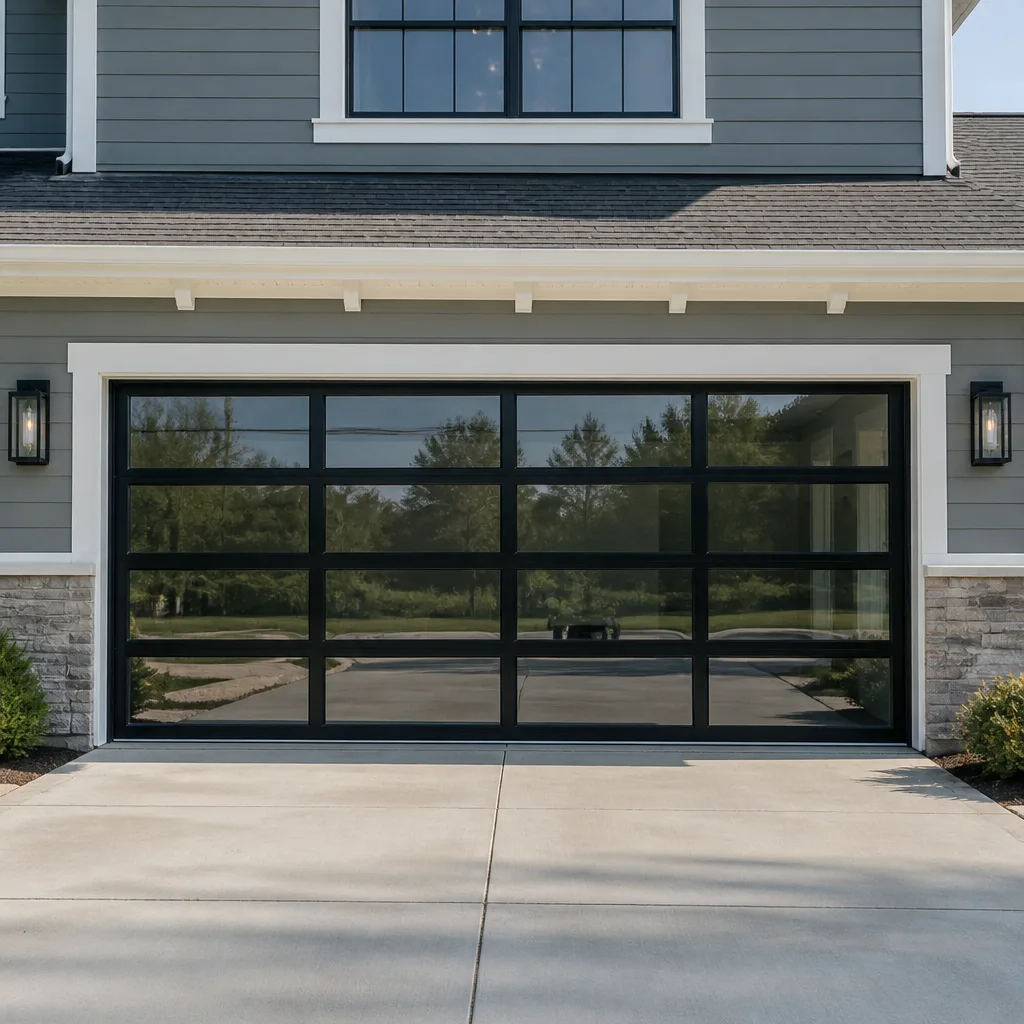 Full-view glass
 LiftMaster openers
 Chamberlain openers
Full 25-point door and opener safety check with every visit - springs, cables, rollers, tracks, and your LiftMaster or Chamberlain opener included
You get a price before we start. It does not change when the pro arrives.
Get your free estimateSeasonal Garage Door Care for Warren: Year-Round Homeowner’s Guide
The spring thaw is when torsion springs snap in Warren, not the deep cold of January. Steady cold keeps a spring under constant tension, and metal handles that reasonably well. What it doesn’t handle well is the swing: weeks of hard freeze followed by a fast warm-up, then cold again, then warm again. That repeated cycle fatigues the steel far faster than a long, flat stretch of winter ever does. By the time the snow melts, a spring that survived December is running on borrowed time. This guide breaks down what’s actually under stress in each of Warren’s four seasons, what to check before each one arrives, and which maintenance tasks genuinely prevent expensive repairs versus which just feel productive.
Quick Answer
Garage door care in Warren works best as four seasonal checkpoints, not one annual task. In spring and fall, focus on torsion springs, weather seals, and the bottom section. In summer, watch for humidity-driven swelling in wood components and opener sensitivity drift. In winter, keep the bottom seal clear of ice and never force a frozen door open. Each season stresses different parts, and checking the right component at the right time is what actually prevents a breakdown.
Styles & brands we work with
- Raised-panel steel
- Carriage house
- Modern flush
- Full-view glass
- LiftMaster openers
- Chamberlain openers
Table of Contents
- Spring in Warren: The Highest-Risk Window for Springs
- Summer Humidity and Opener Sensitivity
- Fall Prep Before the First Freeze
- Winter: Frozen Doors and What Not to Do
- A Month-by-Month Quick Reference
- The Four-Point Seasonal Checklist
- Common Mistakes to Avoid
- When to Call a Professional
Spring in Warren: The Highest-Risk Window for Springs
March and April are when we see the most spring failures in Warren, and the reason is mechanical. A torsion spring lives under constant tension, and during a sustained cold snap the steel stays at a fairly uniform temperature. When you get freeze-thaw cycles, the metal expands and contracts repeatedly. Add the vibration of a door opening and closing dozens of times a week, and the cumulative fatigue catches up. The first warm week of spring is often when a tired spring finally lets go.
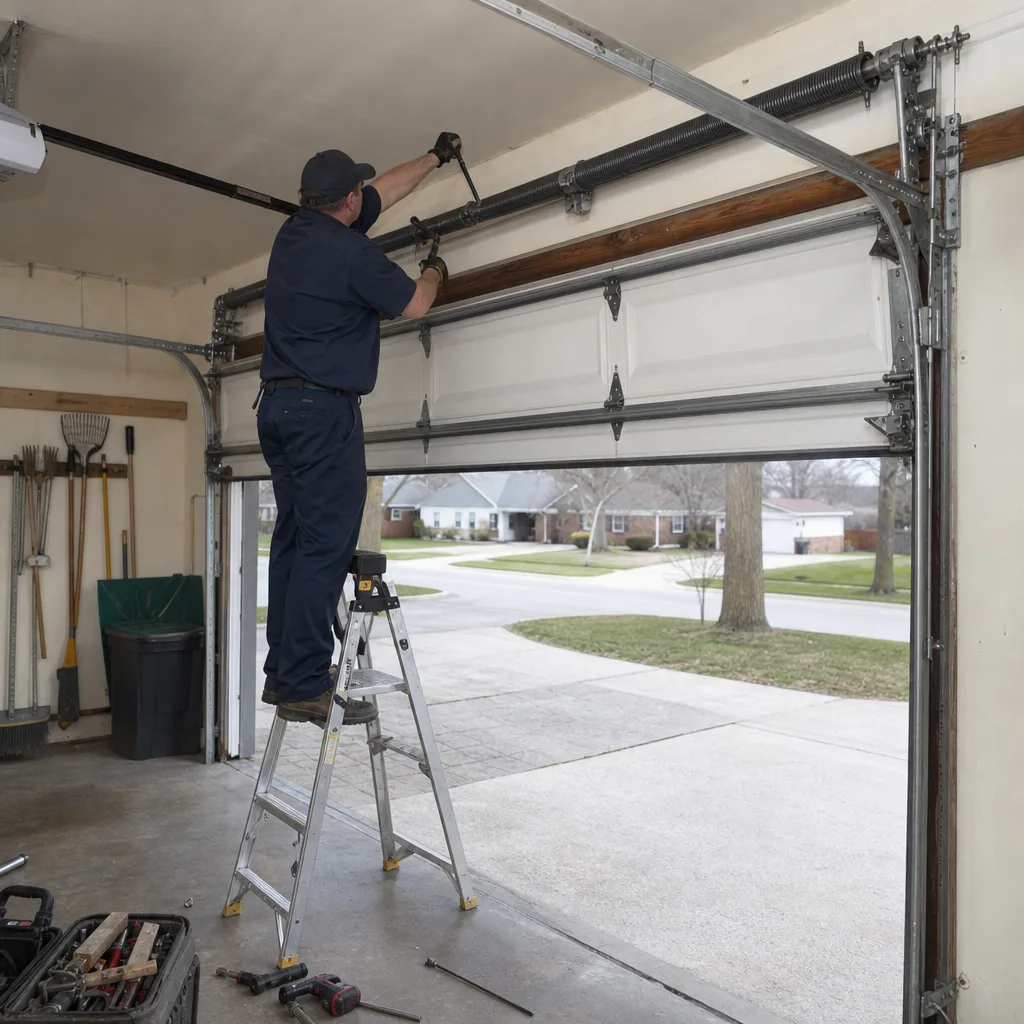
What you can check without touching the spring itself is the door’s balance. Disconnect the opener using the manual release, then lift the door halfway by hand and let it rest. A balanced door stays put. A door that drifts down on its own or feels much heavier than usual is telling you the spring has lost tension. This is a check you can do safely, with the door stationary and your hands clear of the hinges.
What you should not do is adjust the springs. Torsion springs store enough energy to cause serious injury, and the winding bars involved in adjusting them are not a homeowner tool. If a balance check turns up a problem, that’s a job for a trained technician. The safety caveat here matters more than any other in this guide.
Spring also brings two other checks worth doing while you’re outside anyway:
- Inspect the bottom weather seal for cracks that let meltwater in.
- Clear the tracks of grit and salt residue left from winter, then check that the door rolls smoothly.
- Test the safety reverse by placing a roll of paper towel in the door’s path and confirming it reverses on contact.
If you find a balance issue or a spring that looks stretched, a garage door repair visit in early spring is far cheaper than an emergency call once the spring breaks with your car inside. Warren’s freeze-thaw pattern makes March the single most valuable month to check.
Summer Humidity and Opener Sensitivity
Summer in Warren means humidity, and humidity hits garage doors in ways homeowners don’t expect. If your door has wood components, whether a full wood door or wood-look sections with wood framing, moisture causes swelling. A door that fit perfectly in April can start binding in July because the wood has expanded by a fraction of an inch. That binding puts extra load on the opener, which is where a lot of summer opener failures begin.
The other summer issue is opener sensitivity drift. As temperatures rise, the travel limits and force settings on your opener can shift slightly. A LiftMaster or Chamberlain unit that’s dialed in for cool spring weather may trip its safety reverse too easily in the heat, or strain to close because the door has swollen. Neither is a sign the opener is failing. Both are signs the door and opener need to be recalibrated together.
What to watch for in summer:
- A door that closes then immediately reopens on its own. That’s the safety reverse tripping due to increased resistance.
- Grinding or rubbing sounds as the door travels, which usually means the door is binding against the frame.
- An opener that strains or slows near the bottom of its travel.
- Visible gaps or swelling at the door’s edges from humidity.
A Genie or Craftsman opener with a screw or belt drive will often show the first signs of a binding door through the force-setting behavior. If the opener is straining, the fix is usually adjusting the door, not replacing the opener. This is the value of our brand-neutral approach: we diagnose the actual problem instead of reaching for a replacement.
Fall Prep Before the First Freeze
Fall prep is where Warren homeowners get the most return for the least effort, but the order matters. Not every task prevents the same level of damage. Here they are, ranked by consequence rather than alphabetically:
- Lubricate moving parts. Rollers, hinges, and the torsion spring coils get a garage-door lubricant, not WD-40. This keeps metal from seizing during the cold, which is the most common cause of a door that won’t open in January.
- Check and replace the bottom seal. A torn bottom seal lets snow and meltwater under the door, which is the direct cause of a frozen door. This is the single cheapest fix that prevents the most winter calls.
- Test the balance and spring tension. A spring near the end of its life should be caught in fall, not in the middle of February.
- Clear the tracks and check the rollers. A worn roller that’s fine in October can flat-spot in the cold.
- Check the opener’s force and travel limits. Cold makes everything stiffer. An opener set too tight in warm weather will struggle in the cold.
- Trim any vegetation or clear debris from the door’s path. Snow accumulation and ice won’t have anywhere to push if the door’s travel path is clear.
Two of these tasks, lubricating and checking the seal, you can do yourself. The spring balance check is a visual and manual-door check only; adjusting the spring is not a homeowner task. By the time November arrives in Warren, a door that’s properly sealed, lubricated, and balanced should carry you through to spring without drama.
Winter: Frozen Doors and What Not to Do
The most common winter garage door problem in Warren is a door frozen to the floor. It usually happens when meltwater runs under the door during a warm afternoon, then refreezes overnight. The bottom section freezes to the concrete, and the opener strains to lift it.
Here’s the mistake that does real damage: forcing the door open with the opener. When the door is frozen down, the opener pulls against the resistance, which stresses the bottom panel, the hinges, and eventually the opener’s motor and gear assembly. A bent bottom panel from a forced open is a much bigger repair than a thaw.
What to do instead:
- Disconnect the opener using the manual release so it doesn’t keep straining.
- Break the ice bond physically, working a plastic wedge or a broom handle gently along the bottom edge. Never a metal tool that can scratch or gouge the panel.
- Once the door is free, clear the meltwater channel and dry the floor before the next freeze.
The other winter task that matters is keeping the bottom seal intact. A seal that’s torn or flattened by fall won’t block water in winter, which is exactly how doors freeze to the floor in the first place. If your seal is shot, fixing it before the first hard freeze saves you a winter problem. Warren’s winters are hard on seals, and a Clopay or Amarr door with a worn seal will let water in every time.
A Month-by-Month Quick Reference
If you’d rather not think about seasons in the abstract, here’s the calendar version for Warren. These are checkpoints, not projects. Most take less than ten minutes.
| Month | Focus | What to Check |
|---|---|---|
| March | Spring tension | Balance check by hand; watch for a heavy-feeling or drifting door |
| April | Tracks and seals | Clear salt and grit from tracks; inspect the bottom seal |
| May through August | Humidity and opener | Door binding, reverse tripping, opener strain |
| September | Pre-freeze prep | Lubricate, test balance, replace a worn bottom seal |
| October | Opener calibration | Force and travel limits; clear the door’s path |
| November through February | Ice management | Keep the bottom edge clear; never force a frozen door |
You don’t need to book this as a service. Most of these checks are visual and take a couple of minutes. What you’re really doing is catching the small problem before it becomes the emergency. That’s the whole point of seasonal care in Warren.
The Four-Point Seasonal Checklist
This is the version we’d recommend anyone in Warren use, across all four seasons. It covers the four components that fail most often here, at the times they’re most likely to fail.
- Springs (check in spring and fall): Balance test by hand with the opener disconnected. A heavy or drifting door indicates loss of spring tension.
- Seals (check in fall and after any thaw): Inspect the bottom seal for tears and compression. Replace before ice season, not after.
- Opener (check in summer and fall): Watch for reverse tripping, strain, and travel-limit issues. Recalibrate after the door is confirmed to be moving freely.
- Tracks and hardware (check quarterly): Clear grit, check rollers for flat spots, listen for grinding or popping.
If you check these four things at the right times, you’ll catch most of the problems we get called about before they cause a door stuck open or a car trapped inside. For opener-specific issues, our garage door opener repair team handles both the mechanical drive and the electronic components on LiftMaster, Chamberlain, and Genie units.
Why Warren’s Climate Hits Doors Differently
Southeast Michigan sits in a freeze-thaw band that’s harder on garage hardware than either a consistently cold climate or a consistently mild one. A door in northern Michigan deals with cold, but it deals with the same cold for months. A door in Warren deals with several full freeze-thaw cycles every winter, and the temperature swings put stress on metal, wood, and concrete at once.
The other Warren-specific factor is road salt. Salt mist from winter roads settles on the tracks, hinges, and rollers, and left over the season it becomes a grit that accelerates wear on moving parts. Spring cleaning of the tracks isn’t cosmetic; it’s removing an abrasive that will shorten the life of your rollers. This is one reason we recommend checking the hardware each spring rather than assuming it’s fine.
The last piece is that most Warren garages are attached and not conditioned, so the door and its hardware experience nearly the same temperature swings as the outside air. That means the door is working in conditions that change by forty or fifty degrees within a week. Treating it as a single annual task misses three of the four windows when intervention actually matters, which is the core idea behind seasonal care. If you want the full picture of what we handle, our Warren Garage Door Service overview is the place to start.
How to Check Your Springs Safely
We want to be specific here, because spring checks are where homeowners are most likely to get hurt and least likely to know it. A torsion spring stores enough energy to cause serious injury if it releases unexpectedly, and the winding bars used to adjust one are heavy steel tools that many people don’t realize they need. The safety line is simple: you can check the door’s balance, but you must not adjust the spring.
The safe check:
- Close the door fully and disconnect the opener using the manual release cord.
- Lift the door halfway by hand and let it rest.
- A balanced door stays. A door that drops or feels very heavy has lost spring tension.
- Reconnect the opener and call a professional if the door failed the check.
What not to do: don’t insert a bar or wrench into the torsion spring winding system, don’t try to loosen a spring you think is under too much tension, and don’t touch the cables or the cable drums. A broken spring is a call, not a DIY project. The cost of a professional repair is always less than the cost of an injury, and in Warren most spring repairs can be scheduled quickly.
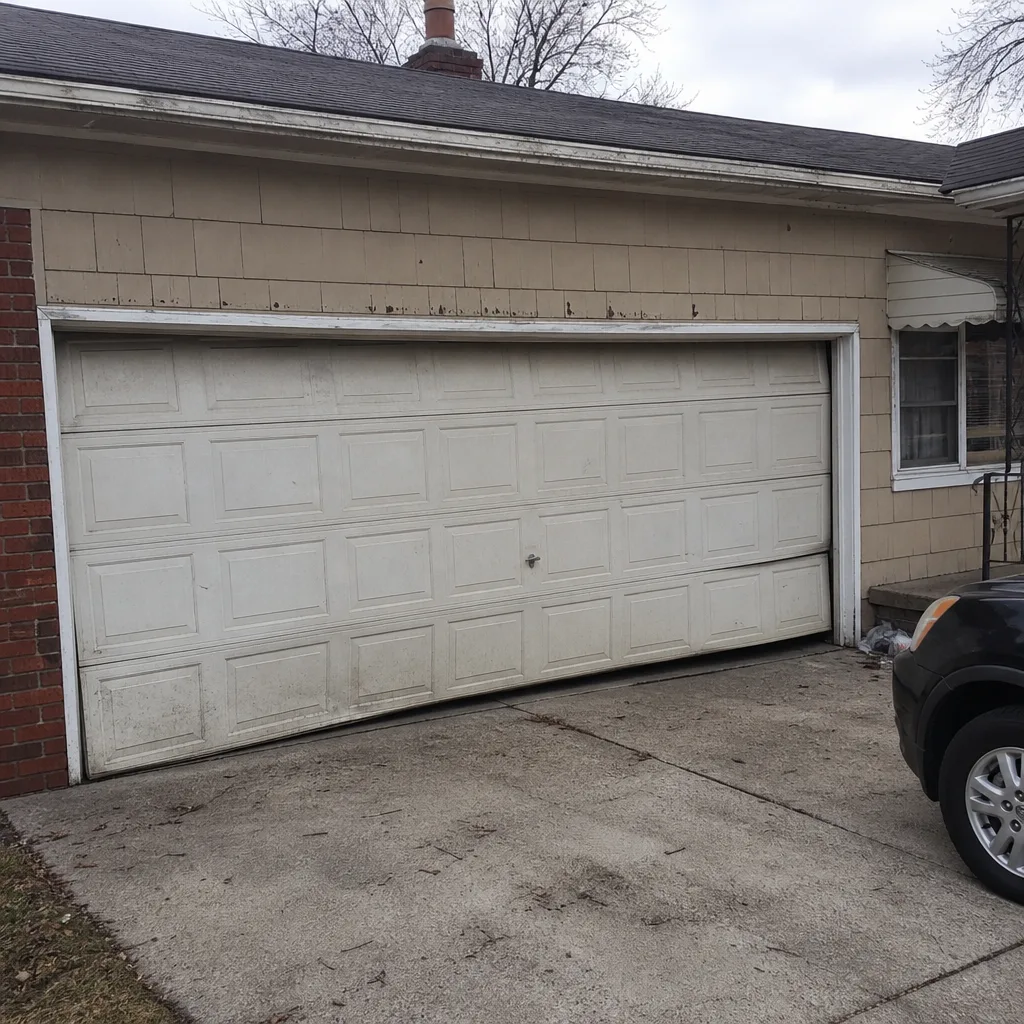
See the difference
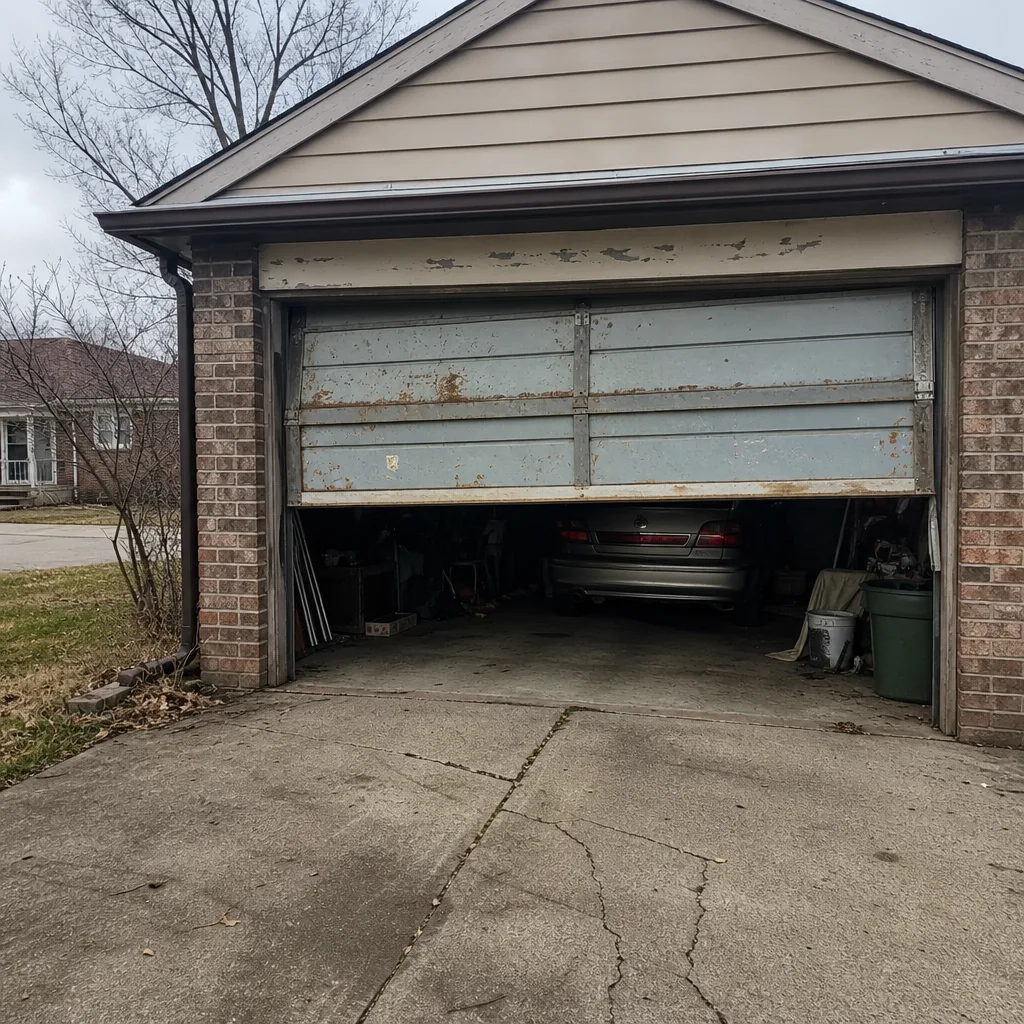 Before
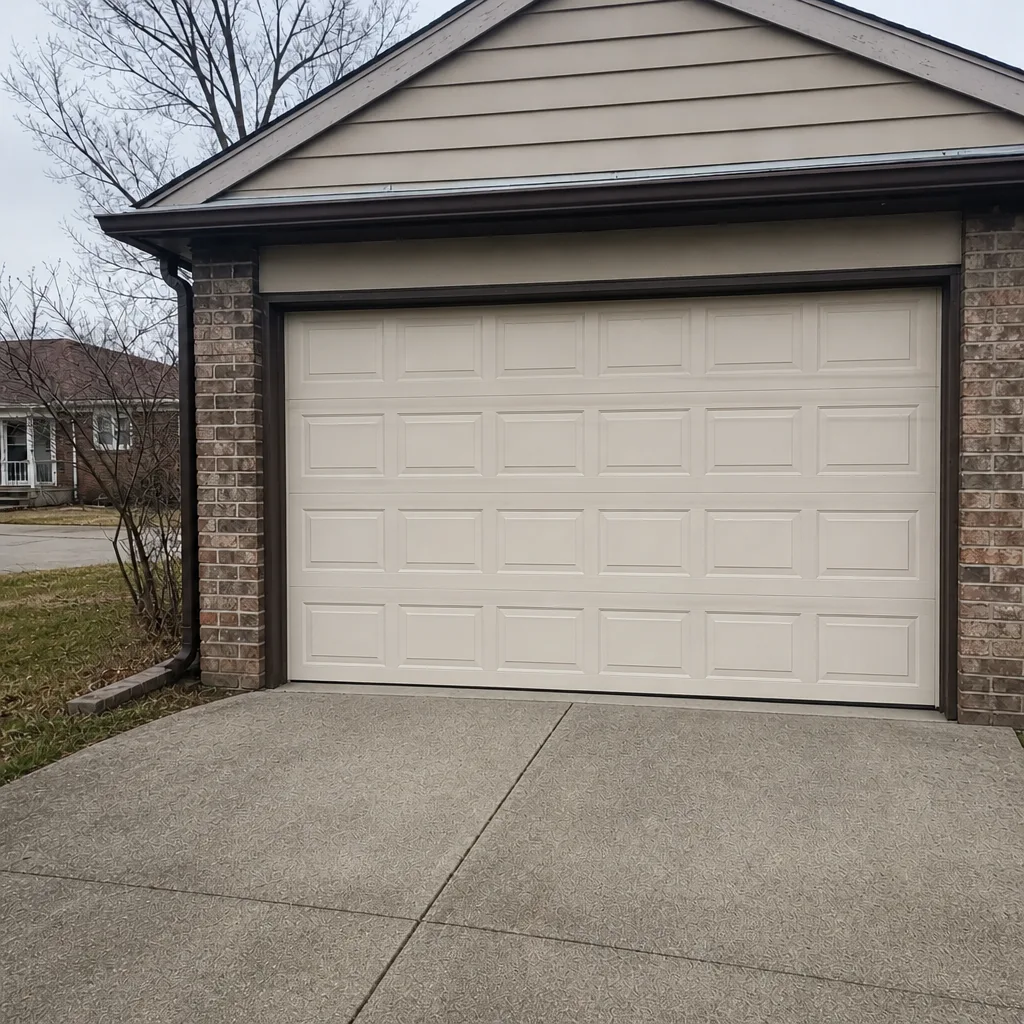 After
 Before
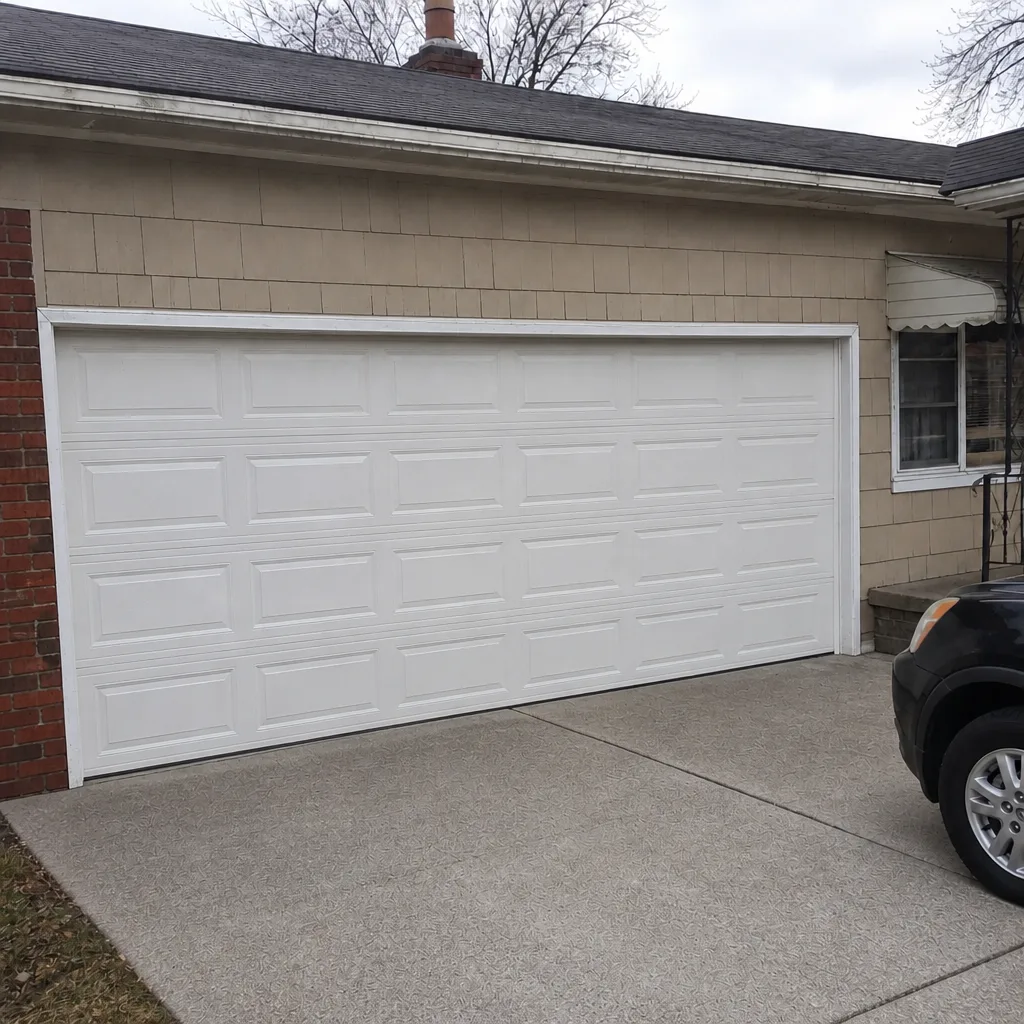 After
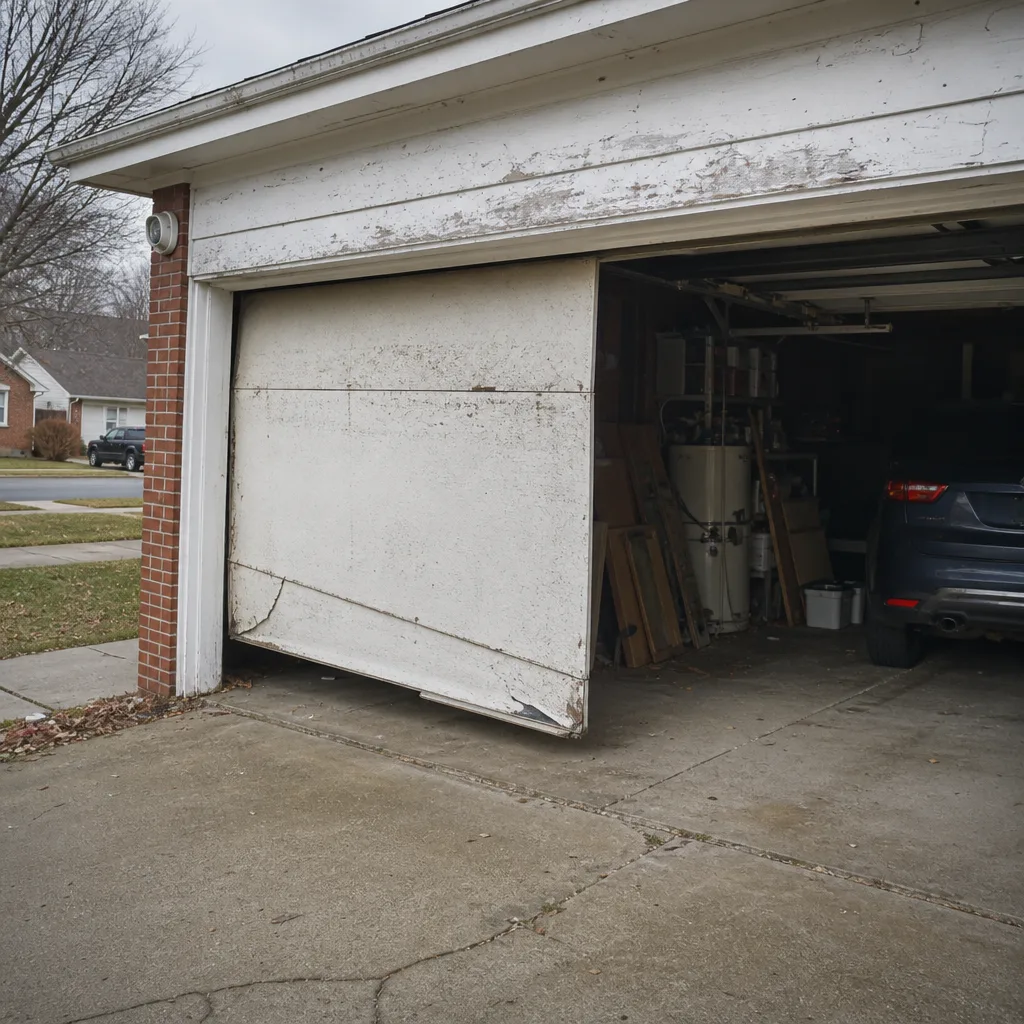 Before
 After
What Seasonal Care Costs in Warren
Seasonal care itself is mostly free if you do the checks described above. Where money enters the picture is when a check turns up a part that needs replacing. These are typical estimates for common repairs, and the written estimate always sets the final price before work starts.
- Bottom seal replacement: typically $90 to $180 depending on door width and seal type.
- Lubrication and tune-up as part of a repair visit: usually included with the repair.
- Roller and hinge replacement: typically $120 to $280 depending on how many.
- Opener recalibration and force-setting adjustment: typically part of an opener repair visit.
- Single torsion spring replacement: typically a $180 to $340 range. A matched pair is usually replaced together, so a pair costs about twice that.
These are typical ranges, not a quote, and the exact figure depends on your door, your opener, and what the technician finds on the visit. The important point is that a $90 seal in the fall is what prevents a bent bottom panel or a frozen door repair in January. Catching the problem on a scheduled check is always cheaper than catching it after a failure. Call Warren-based Warren Garage Door Service at (866) 942-9754 for a free estimate, and we’ll quote the work and agree the price before we start.
Opener Calibration: Why Season Matters
A garage door opener is calibrated to move a specific door under specific conditions. When the door changes with the season, the opener is now calibrated for conditions that no longer exist. This is why so many opener problems appear in transitional weeks, spring and fall, rather than in the middle of a season.
The most common symptom is the door reversing before it fully closes. On a LiftMaster or Chamberlain unit, the safety reverse is doing its job: it’s detecting extra resistance, likely because the door has swollen, the tracks have grit, or a roller is dragging. Recalibrating the force setting without fixing the underlying door problem just masks the symptom and puts stress on the opener motor. The right order is to check the door first, then recalibrate the opener.
Our technicians have up to 12 years of experience and work across LiftMaster, Chamberlain, Genie, Clopay, Amarr, Wayne Dalton, Craftsman, and Raynor systems. When an opener keeps tripping in summer or straining in winter, we diagnose the actual cause rather than recommending a replacement. Repair first, replace only when necessary. That’s how we approach every opener call in Warren.
Common Mistakes to Avoid
- Forcing a frozen door open. When the bottom section is frozen to the floor, the opener pulls against resistance that bends the panel and strains the motor. Disconnect the opener and free the door by hand first.
- Skipping the spring check in March. Warren’s freeze-thaw cycles fatigue springs more in early spring than in deep winter, and most homeowners check in October instead. Check in both seasons.
- Using WD-40 on the springs and hinges. It’s a solvent, not a lubricant, and it leaves metal dry. Use a garage-door lubricant designed for the job.
- Recalibrating the opener before checking the door. A binding door will keep tripping the safety reverse no matter how the opener is set. Fix the door first, then the opener.
- Ignoring a torn bottom seal through summer. It won’t cause a problem until the first freeze, and then it becomes a frozen door. Replace it in fall, not after the ice arrives.
- Assuming a new opener will fix a door problem. If the door is out of balance or binding, a new opener will struggle with the same conditions the old one did. The door comes first.
- Clearing the tracks only after they squeak. By the time you hear grinding, the rollers are already wearing. Clear salt and grit each spring as routine.
When to Call a Professional
Most seasonal checks are things you can do yourself, and we’d rather you know how than call us for something simple. But some situations call for a trained technician, and knowing the line is worth more than any maintenance schedule. Call a professional when the door fails the balance check, when you see a visibly stretched or broken spring, when the door binds in the tracks, when the opener reverses or strains repeatedly after you’ve checked the door, or when the bottom panel is bent or the door won’t close flush.
For any of those, Warren Garage Door Service offers free estimates in Warren. Call (866) 942-9754. We answer 24/7, with fast dispatch from 7am to 7pm, Sunday through Friday. We’ll quote the work and agree the price before anything starts, so there’s no surprise when the invoice arrives.
Frequently Asked Questions
March and April, not mid-winter. The repeated freeze-thaw cycles of a southeast Michigan spring fatigue torsion springs more than steady cold does, because the metal expands and contracts repeatedly. That’s why the spring check is worth doing early in spring, before the first warm stretch finishes off a tired spring.
Twice a year, in fall before the first freeze and in spring after the thaw. Fall lubrication keeps the moving parts from seizing in the cold, and spring lubrication clears the grit and salt buildup from winter. Use a garage-door lubricant on the rollers, hinges, and springs, not WD-40.
Meltwater runs under the door during a warm afternoon, then refreezes overnight and bonds the bottom section to the concrete. Disconnect the opener, break the ice bond carefully with a plastic tool, and dry the floor before the next freeze. Never force the door open with the opener, because it bends the bottom panel and strains the motor.
Yes, if the door has wood components. Humidity causes wood to swell, which can make a door that fit perfectly in April start binding in July. That binding puts extra load on the opener and often shows up as the door reversing or straining near the bottom of its travel. Fix the door first, then recalibrate the opener.
Often, yes. The safety reverse is detecting extra resistance, which can come from a humidity-swollen door, grit in the tracks, or a worn roller. The door is usually the cause, not the opener, so check the door’s movement first before touching the opener’s force settings. Call (866) 942-9754 for an exact quote, and estimates are free.
Very likely. We work on LiftMaster, Chamberlain, Genie, Clopay, Amarr, Wayne Dalton, Craftsman, and Raynor systems, covering the vast majority of doors and openers already installed in residential homes. That includes Craftsman and Wayne Dalton systems in older Warren homes that some contractors decline to service. Warren handles it.
The Bottom Line
Seasonal garage door care in Warren comes down to checking the right part at the right time. Springs are most at risk in the spring freeze-thaw window. Seals and tracks matter most in fall before the first freeze. Openers and wood components need attention in summer humidity. Winter is about ice management and never forcing a frozen door. If you do nothing else, do the spring balance check and replace the bottom seal in fall. Those two tasks prevent the majority of the failures we get called about in Warren, and they cost almost nothing compared to a repair. When something fails a check, call in a technician and let the written estimate set the price.
Call (866) 942-9754 for a free estimate. We answer 24/7. Fast dispatch from 7am to 7pm, Sunday through Friday.
Written by the team at Warren Garage Door Service.